Contact information:
- Address: Vinhomes Grand Park, District 9, Ho Chi Minh City, Vietnam.
- Hotline: 097 145 04 54
- Winterfrost – AI Development – Website Design – App Design – Contact for consultation.
In the context of digital transformation taking place strongly,medical application(Healthcare App)increasingly becoming an indispensable part of the modern healthcare ecosystem. According to many market reports, the global medical application market size has grown rapidly thanks to the popularity of technology.mHealth (Mobile Health), along with the need for remote health management, online medical examination and treatment, and real-time patient monitoring.
Not only do they bring convenience to patients, medical applications also help doctors and medical facilities improve the efficiency of medical examination and treatment, optimize work processes and improve the quality of care. In this article,Winterfrostwill explore with youOutstanding benefits of medical applications for both patients and doctors, and explains why this is becoming an inevitable trend of the Healthcare industry in the digital era.
What is mHealth?
mHealth (Mobile Health)is a term used to refer to the application of mobile devices and technology to support the provision of health care services, improve treatment effectiveness and improve public health. TheoWorld Health Organization (WHO), mHealth is the exploitation of mobile technologies to expand medical access and optimize the quality of patient care.
The mHealth ecosystem includes many different solutions such as:
- Medical application on smartphones and tabletshelps users schedule examinations, monitor health and manage medical records.
- Wearablessuch as a smart watch or fitness tracker, supporting real-time monitoring of heart rate, sleep, amount of exercise and health indicators.
- Telemedicine platformallows doctors and patients to consult online via video calls, helping to save time, reduce costs and expand access to medical services.
Thanks to the development of mHealth, health care is becoming more convenient, personalized and effective, while opening up many opportunities for hospitals, clinics and Healthcare businesses to promote digital transformation.
Benefits of Medical Applications for Patients and Doctors
Healthcare App is becoming an important tool in the process of digital transformation of the healthcare industry, bringing many practical values to both patients and patients.doctorand medical examination and treatment facilities. Whether developed by an in-house team or a professional software development partner, the goal of medical applications is to improve the quality of healthcare, optimize operational processes and improve user experience. Below are the outstanding benefits that a modern medical application can bring.
Experience More Convenient Healthcare
One of the biggest benefits of medical applications is helping patients access serviceshealth carefaster and more convenient. With just a smartphone, users can:
- Schedule an appointment online.
- Look up medical records.
- Receive test results.
- Contact your doctor when you need advice.
This helps reduce waiting times, limit paperwork and provide a more flexible medical experience for both patients and medical facilities.
Accurate and Effective Health Management
The health application allows users to track health indicators such as:
- Blood pressure.
- Blood sugar.
- Heart rate.
- Weight.
- BMI index.
Continuously updated data helps doctors have more information to assess health status more accurately, thereby providing appropriate treatment regimens and reducing the risk of errors during the care process.
Support Better Treatment Decision Making
Quick access to medical records, medical history and test results helps both patients and doctors make faster and more accurate medical decisions.
For patients, understanding their health condition helps them be more proactive in the treatment process.
For doctors, complete and updated real-time data supports accurate diagnosis, limits the omission of important information and improves treatment quality.
Increase Working Efficiency for Hospitals and Clinics
Medical applications help automate many processes such as:
- Make an appointment.
- Manage electronic medical records.
- Issuing electronic prescriptions.
- Reminder for follow-up appointments.
- Online payment.
Reducing administrative work helps the medical team have more time to focus on their expertise, while improving operational efficiency for the patient.hospitaland clinic.
Remote Medical Examination Through Video
Telemedicine is becoming one of the important features of modern medical applications.
Through online video calls, doctors can advise, monitor and support patients without having to meet face-to-face in non-emergency cases. This is especially useful for:
- Elderly people.
- Patients with chronic diseases.
- People living in remote areas.
- People who have difficulty moving.
Remote medical examination not only saves time but also contributes to expanding access to quality medical services.
Supports Effective Chronic Disease Management
For patients with chronic diseases such as diabetes, cardiovascular disease or hypertension, the medical application acts as a personal "health assistant".
Users can:
- Track health indicators every day.
- Receive reminders to take your medicine on time.
- Manage re-examination schedules.
- Monitor treatment progress.
- Share data with your doctor when needed.
Thanks to that, patients are more proactive in controlling their health condition, reducing the risk of complications and improving long-term quality of life.
Applications Of mHealth In Health Care
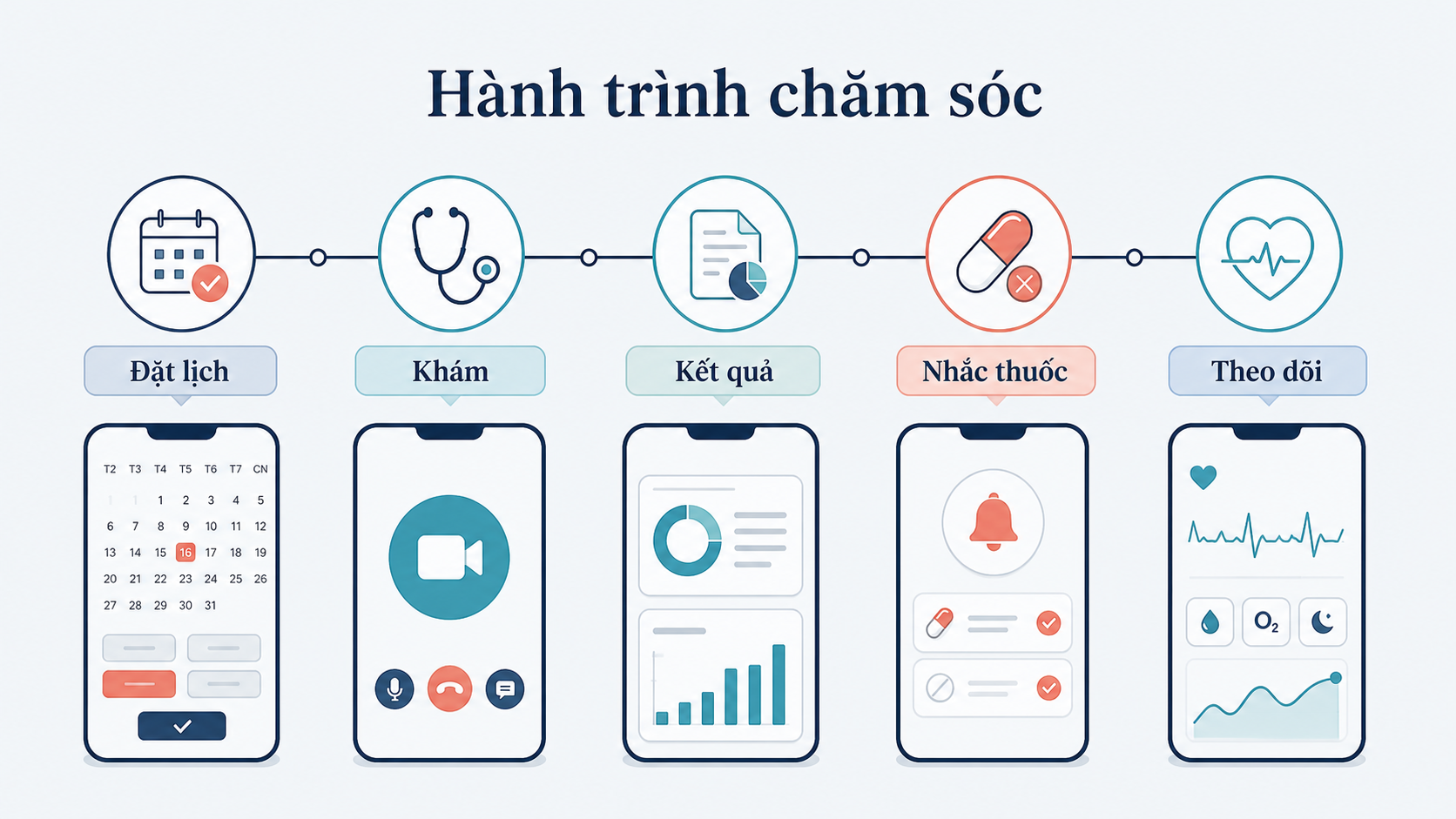
The development ofmHealth (Mobile Health)has opened up many opportunities to improve the quality of medical services and optimize the experience of both patients and medical teams. From medical record management to remote medical examination and treatment, mHealth applications are contributing to promoting digital transformation in the Healthcare industry. Below are the outstanding applications of mHealth today.
Electronic Medical Record Management
mHealth allows hospitals and clinics to build systemsElectronic Health Records (EHR)on mobile devices.
Through the application, doctors can:
- Look up patient information quickly.
- Update examination and treatment results in real time.
- Track medical history anytime, anywhere.
Digitizing records helps reduce paperwork, limit errors during data entry and improve coordination between medical departments.
Building a Mobile Medical Information Portal
mHealth apps act as onePatient Portal, helping patients proactively manage their health.
Users can easily:
- Login to view medical records.
- Schedule an appointment online.
- Receive test results.
- Renew your prescription.
- Communicate with your doctor through a secure messaging system.
This not only saves time but also improves connectivity between patients and medical facilities.
Share Medical Images Safely
One of the useful applications of mHealth is supportShare medical imagesbetween patient and doctor.
Patients can send:
- Image of skin damage.
- Wound.
- Test report.
- Diagnostic images.
for a preliminary assessment by a doctor without having to go directly to the hospital in non-emergency cases.
At the same time, doctors can also share images or professional documents with colleagues to consult and come up with more optimal treatment plans.
Providing a Warehouse of Medical Knowledge for Patients
mHealth helps build oneHealth knowledge libraryright on your mobile device.
Users can easily access:
- Professional articles.
- Video health care instructions.
- Knowledge of disease prevention.
- Instructions for use of the drug.
- Information about treatment methods.
For doctors and medical staff, this is also a useful resource to update professional knowledge, follow new research and improve the quality of patient care.
Electronic Prescription
One of the important applications of mHealth iselectronic prescription (e-Prescription).
Instead of using paper prescriptions, doctors can send prescriptions directly to the system or pharmacy through an electronic platform.
This solution brings many benefits such as:
- Reduce errors due to hard-to-read handwriting.
- Limit confusion when dispensing medicine.
- Save time for doctors and pharmacists.
- Helps patients receive medicine faster.
At the same time, patients can also easily review prescriptions and drug usage history right on the application.
Medication Management and Dosage Reminders
mHealth applications also serve as onePersonal medication administration assistant.
Users can:
- Save a list of medications you are using.
- Monitor dosage and duration of medication.
- Receive reminders to take your medicine on time.
- Share medication information with your doctor at each follow-up visit.
This helps improve treatment compliance, limit missed medications and reduce the risk of incorrect dosage, especially for the elderly or patients with chronic diseases.
Conclusion
Medical applications are becoming an important foundation in the digital transformation of the Healthcare industry, bringing many benefits to both patients, doctors and medical facilities. From medical record management, appointment scheduling, online consultation to real-time health monitoring, mHealth solutions help improve care quality, optimize operating processes and improve user experience.
In the future, as AI, cloud computing and smart wearables continue to develop, the role of medical applications will become more and more important in building a modern healthcare system. If your business, hospital or clinic is looking for an effective digital transformation solution,Winterfrostready to accompany to develop medical applications that are safe, secure and meet the actual needs of the Healthcare industry.
Benefits of Medical Apps for Patients and Doctors
Frequently Asked Questions (FAQ)
1. What is a Healthcare App?
Medical applications are software developed on phones or tablets to support users in managing their health, making medical appointments, consulting online, tracking medical records, receiving electronic prescriptions and connecting with doctors anytime, anywhere.
2. How is mHealth different from Telemedicine?
mHealth (Mobile Health)is a broad concept, including all mobile healthcare solutions such as health monitoring applications, smart wearables and electronic medical records. Meanwhile,Telemedicinemainly focuses on remote medical examination and consultation via video call or online platform.
3. What benefits does a medical application bring to patients?
Medical applications help patients easily schedule examinations, manage health records, receive medication reminders, track health indicators, consult online with doctors and access medical care more quickly.
4. How do medical applications help doctors and hospitals?
For doctors and medical facilities, the application helps digitize medical records, automate the scheduling process, patient management, and electronic prescriptions, reducing administrative work and improving medical examination and treatment efficiency.
5. Does the medical application ensure data security?
Yes, if developed according to appropriate security standards such asHIPAA, GDPRor applicable health data protection regulations. Modern applications often integrate data encryption, multi-layer authentication and access authorization to protect patient information.
6. What are the important features of a modern medical app?
A modern medical application often includes features such as online appointment scheduling, electronic medical records, telemedicine, medication reminders, online payments, health monitoring, test results notification and integration with smart wearable devices.
7. How should businesses start developing medical applications?
Businesses should clearly define business goals, user groups, priority features and security requirements before development. Cooperating with a unit with experience in the field of Healthcare and digital transformation will help shorten implementation time, optimize costs and ensure the application meets current medical standards.