Contact information:
- Address: Vinhomes Grand Park, District 9, Ho Chi Minh City, Vietnam.
- Hotline: 097 145 04 54
- Winterfrost – AI Development – Website Design – App Design – Contact for consultation.
JavaScript (JS)is one of the most popular and important programming languages in modern web development. From simple effects to complex web applications, JavaScript plays a key role in building flexible and interactive user experiences.
Although many new languages are born today,JavaScript still maintains its position as an indispensable platformthat every programmer should master.
In this article,Winterfrostwill explore with youWhat is JavaScriptand why this language plays an important role in website design.
What is JavaScript?
JavaScriptis a programming language developed byBrendan Eichin year1995, with the goal of turning static websites intomore interactive, flexible and lively. Thanks to JavaScript, users can perform operations directly in the browser without reloading the page, helping to improve server performance and enhance user experience.
A common misunderstanding isJavaScript originates from Java, but in reality that is not the case. The name "JavaScript" was just a naming strategy following the trend of the time, to take advantage of Java's popularity to attract attention - but in essence, these are two completely different languages.
Initially, JavaScript was mainly used in browser environments (client-side). However, over time, this language has flourished and becomecross-platform language, can run on the server (server-sidewith Node.js), desktop applications, IoT devices, and even mobile applications.
Advantages of designing websites with JavaScript
JavaScript is one of the core technologies that makes websites modern, interactive, and efficient. After more than 20 years of development, JavaScript is still the most popular web programming language in the world thanks to the outstanding advantages below:
For website owners and developers
1. Save server bandwidth
JavaScript runs directly on the user’s browser (client-side), helping reduce server load, save bandwidth, and lower system operation costs. This was also the initial goal when Brendan Eich created this language.
2. Flexible operation, cross-browser compatibility
JavaScript can be embedded directly into HTML or called from separate files, without additional installation. This language works well on most browsers like Chrome, Firefox, Safari, Edge, Cốc Cốc...
In addition, modern browsers all have built-in JavaScript interpreters, ensuring compatibility and smooth operation.
3. Easy debugging and error handling
JavaScript is strongly supported by developer tools like DevTools (browser), allowing monitoring, setting breakpoints, and easy debugging. Clear syntax and reasonable structure make maintenance and error fixing quicker.
4. Create dynamic effects and advanced features
JavaScript allows creating vibrant effects like image sliders, popups, dropdowns, real-time data validation, and many other interactive behaviors. This language also supports building complex web apps, customizable according to user and business needs.
For users
1. Smooth and instant interactive experience
Websites using JavaScript provide users with a flexible, responsive experience to actions such as:
-
Smooth page scrolling
-
Interaction without reloading
-
Instant feedback when entering data or pressing buttons
2. Attractive effects, drawing users' attention
Images and content on the page are no longer static but can move, change, creating a modern and professional feel. This not only increases user experience (UX) but also helps retain visitors on the website longer.
JavaScript not only helps the website function more efficiently technically but also enhances the user experience to the optimal level – an important factor in modern web design. Therefore, using JavaScript is the top choice in every professional website development project.
Outstanding applications of JavaScript in web design
With continuous development, JavaScript today it not only handles simple operations but also supports many sophisticated functions, enhancing interactivity and improving user experience. Below are some typical applications:
Improving layout and interface display
Designing responsive layout adjustments depending on screen size
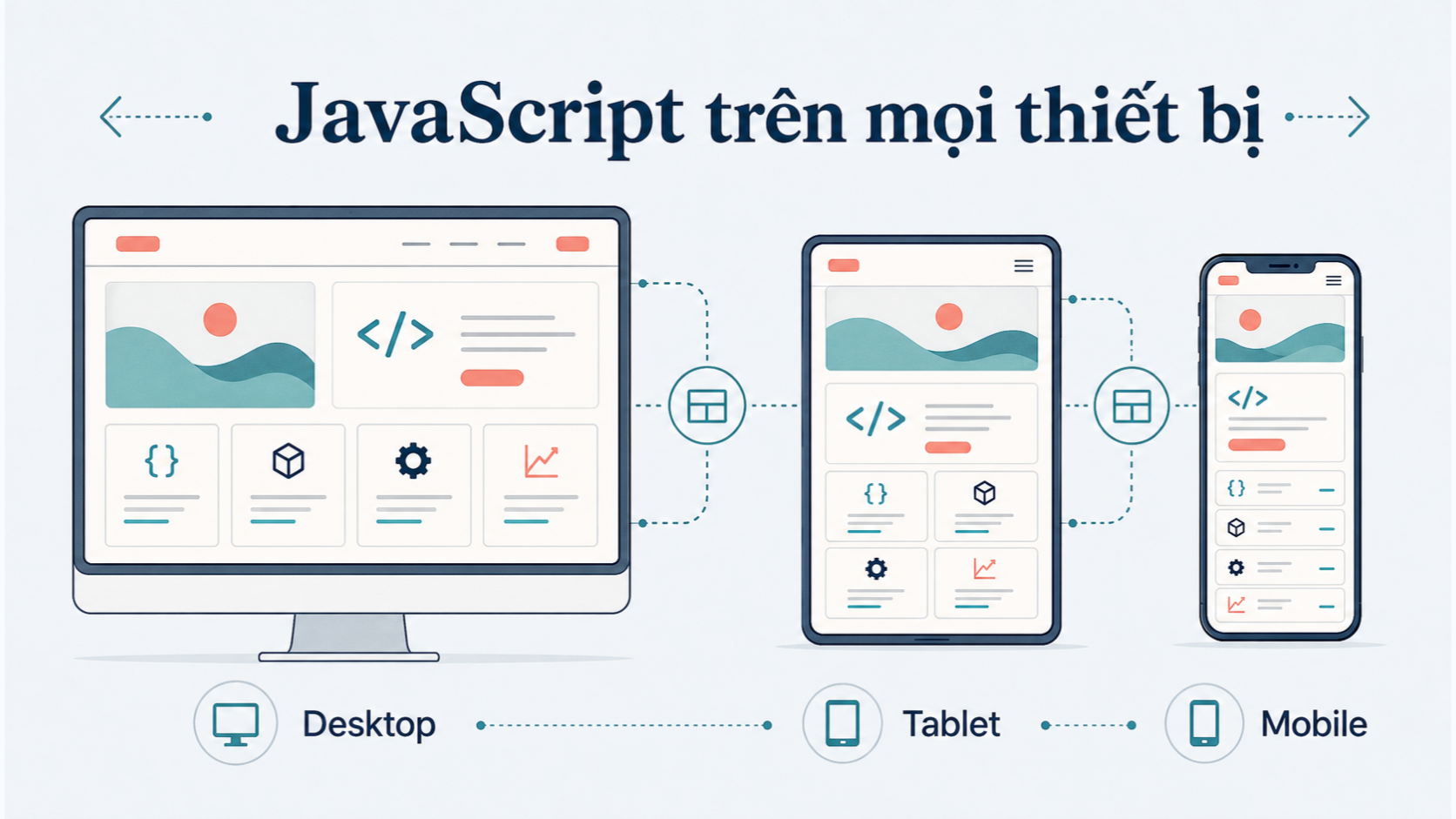
JavaScript can detect device information such as browser, screen resolution, operating system... to adjust the website interface for appropriate display. This is especially useful in responsive design, ensuring the website works well on all screen sizes.
Additionally, in some cases where the browser does not fully support certain features, CSS3JavaScript can serve as a fallback to ensure the layout and effects are displayed correctly.
Creating dynamic and engaging effects
Motion effects are an essential element in modern web design. JavaScript helps create:
-
Effects when scrolling the page (scroll)
-
Image transitions (slider, carousel)
-
Menu animation, buttons, popup
-
Dynamic elements in real time like falling snow, fireworks, holiday effects…
Example: during Lunar New Year, you can use JavaScript to add effects of falling peach blossoms, moving lanterns, making the website more lively and attracting users more.
Although some effects can be done with CSS3, but JavaScript provides smoother, highly customizable and more flexible performance, especially when combined with libraries like jQuery, GSAP or frameworks like React, Vue.
JavaScript not only supports technically but also plays an enhancing role interface (UI)anduser experience (UX), making the website more professional, lively, and engaging.
Improve user interaction features with JavaScript
Not only creating lively effects, JavaScript also helps websites become smarter and more interactive thanks to a series of useful functionalities. Below are some notable applications:
1. Dynamic shopping cart for e-commerce websites
JavaScript allows building an intelligent shopping cart, helping users:
-
Quickly add/remove products
-
Automatically calculate the total invoice
-
Apply discount codes, display shipping fees
-
View order information before checkout
All are handled directly in the browser without needing to reload the page.
2. Real-time username verification
When users enter a registration name, JavaScript can send a query to the database and respond immediately if the name is already used, saving time and enhancing the experience.
3. Keyword suggestions while searching
Feature autocomplete helps users receive a list of keyword suggestions while typing in the search box. This is a familiar feature on Google and can be fully integrated using JavaScript.
4. Update content without reloading the page
Thanks to technology like AJAX, JavaScript can automatically refresh data, update comments, order status, notifications... without interrupting the user experience.
5. Watch videos directly in the browser
JavaScript is the platform that allows the browser to play online videos, whether stored on internal servers or external platforms like YouTube, Vimeo. Without JavaScript, many video features will not work.
6. Interaction automation
JavaScript allows programming automatic behaviors such as:
-
Automatically opening a popup when the user scrolls to a position
-
Displaying notifications after a certain time
-
Executing effects when hovering, clicking, or being idle for a period of time
These features cannot be achieved with only HTML or CSS, and are especially important in game websites, web apps, or highly interactive platforms.
JavaScript is the key to making websites smart, responsive, and highly personalized, creating a more effective and engaging user experience than ever before.
Automation allows JavaScript to build complex web apps
Summary

From the content and specific examples in the article, it is clear that JavaScript plays an indispensable role in modern web design. From definition What is JavaScript to practical applications, we understand that this language not only brings lively effects but also enhances interaction and user experience.
Nowadays, most websites function as web apps, and JavaScript is the core technology behind it. Popular platforms like Gmail, Google Docs, Google Calendar, YouTube hay Instagram heavily rely on JavaScript's processing and interactive capabilities.
If the browser does not support or the user disables JavaScript, many important features will not work – from watching videos, submitting forms, to search experiences or account logins.
For this reason, JavaScript is not just a simple programming tool, but also an important foundation for the development of modern web. If you intend to build a professional, highly interactive, and user-friendly website – JavaScript is definitely a language you cannot ignore.
Frequently Asked Questions about JavaScript in Website Design (FAQ)
What is JavaScript?
JavaScript is a client-side programming language that makes websites more interactive, flexible, and dynamic. It is one of the three core web technologies, along with HTML and CSS.
Is JavaScript necessary for website design?
Yes. JavaScript is a key factor in building dynamic interfaces, creating effects, handling user data, validating forms, updating real-time content, and developing web apps like Gmail, Google Docs, YouTube...
Can a website run if JavaScript is turned off?
Some basic features such as displaying static content (HTML, CSS) still work. However, advanced functions such as shopping cart, user authentication, popups, motion effects, video viewing… will not be usable if JavaScript is disabled.
Does JavaScript affect user device performance?
If used correctly and properly optimized, JavaScript works very efficiently. However, if heavy scripts, many effects, or unnecessary libraries are used, it can cause browser slowdowns or battery drain.on mobile devices.
Is JavaScript safe?
JavaScript can be exploited if not properly secured, especially when handling user input or external data. Developers need to apply preventive measures such as:
-
Input validation
-
Limiting embedded code from untrusted sources.
-
Protection against XSS, CSRF
Can JavaScript be replaced with HTML or CSS?
Some simple effects (hover, animation) can be done with CSS. However, interactive functions, data processing, real-time updates can only be performed by JavaScript. Therefore, JavaScript cannot be completely replaced..