Contact

AI Chatbot Development: A Comprehensive Guide From A–Z

AuthorGia Minh
Last updated07/01/2026

AI chatbot is becoming an important tool to help businesses automate customer care, optimize operations and enhance user experience on many different platforms. Thanks to the application of NLP, Machine Learning and Generative AI, modern chatbots can understand context, respond naturally and help businesses increase long-term performance. To deploy effectively, businesses need to choose the right technology and development partners that suit their business goals.

Themes

AI
AI Chatbot Development: A Comprehensive Guide From A–Z

Contact information:

Artificial intelligence (AI) is becoming an indispensable pillar of the modern economy. AI allows computers to access and process huge volumes of data, learn from behavioral patterns, analyze trends and make intelligent decisions with minimal intervention from humans. Particularly in the field of chatbots, AI-based solutions are no longer considered a high-end utility, but have become an essential tool to help businesses improve customer experience, optimize operations and increase competitive advantage.

Entering 2026, the need to upgrade chatbots to a new level is becoming a strategic priority for many businesses. To realize this goal, partnering with aLeading AI chatbot development companyis the key factor. Companies specializing in AI chatbot development apply advanced technologies such as Artificial Intelligence (AI), Natural Language Processing (NLP) and Machine Learning (ML) to build chatbots capable of accurately understanding written or spoken language, responding in real time and simulating natural conversations like humans.

However, choosing an AI development partner is not only a technical decision but also a long-term strategy that requires careful consideration. A wrong choice can negatively impact customer experience, operational performance, and future scalability.Guide to AI Chatbot DevelopmentThis article is built to provide businesses, startups and corporations with a comprehensive view of how modern chatbots operate, the core technologies behind, as well as the estimated costs to develop an effective chatbot application. At the same time, the content will also help you identify and choose the most suitable partner to develop AI chatbots, ensuring long-term sustainable success.

Let's get started.

How Does AI Chatbot Work?

How Does AI Chatbot Work?

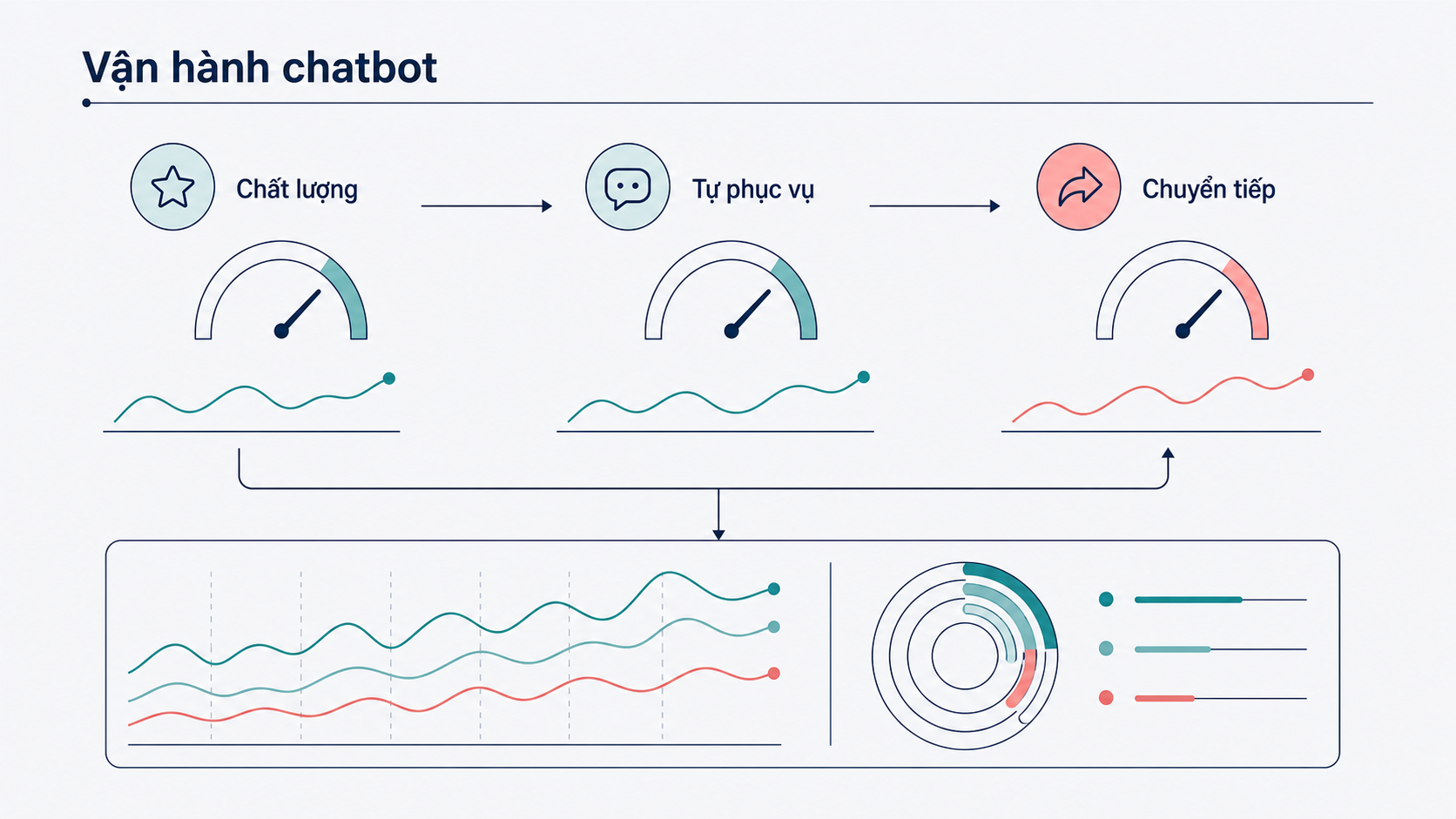
AI chatbots are designed to simulate and respond to human conversational behavior through a combination ofalgorithm, dataandMachine Learning (ML). Thanks to modern technologies, AI chatbots not only answer questions but also have the ability to learn, adapt and respond more and more intelligently over time. Below is the core operating process of a modern AI chatbot:

1. Receive and process user input

When users interact with the chatbot via text or voice, the system will receive input and analyze the content using technology.Natural language processing (NLP). The goal in this step is to understand how users express themselves, identify needs, emotions and context to choose the most appropriate response option.

2. Determine intent and manage conversational context

After analyzing the question, the chatbot will determineintentionof users. Advanced AI chatbots also have the ability to store and exploit contextual data throughout the conversation, thereby maintaining a natural, seamless flow of communication that closely resembles the way humans communicate with each other.

3. Create smart responses

Chatbot responses can be generated in one of three ways, depending on the deployment model:

  • Based on thepre-set scenarios and rules

  • Based onmodelMachine Learninghas been trained

  • Or throughGenerative AI, allowing chatbots to generate more flexible, natural, and context-rich answers

4. Continuously learn and optimize

AI chatbots are continuously improved through training data and feedback from users. Each interaction contributes to helping the system better understand actual needs, thereby improving accuracy, speed and quality of response in subsequent conversations.

It is this intelligent interactive process that makes the difference betweenBasic chatbotsandEnterprise-grade AI chatbots, usually developed by thereputable AI chatbot development company, meeting high requirements for user experience, performance and scalability.

Popular Types of AI Chatbots Today
Popular Types of AI Chatbots Today

Understanding each type of AI chatbot will help businesses choose the most suitable solutionbusiness goals, operating scaleandlevel of complexity of the business. Below are popular types of AI chatbots that are widely deployed today:

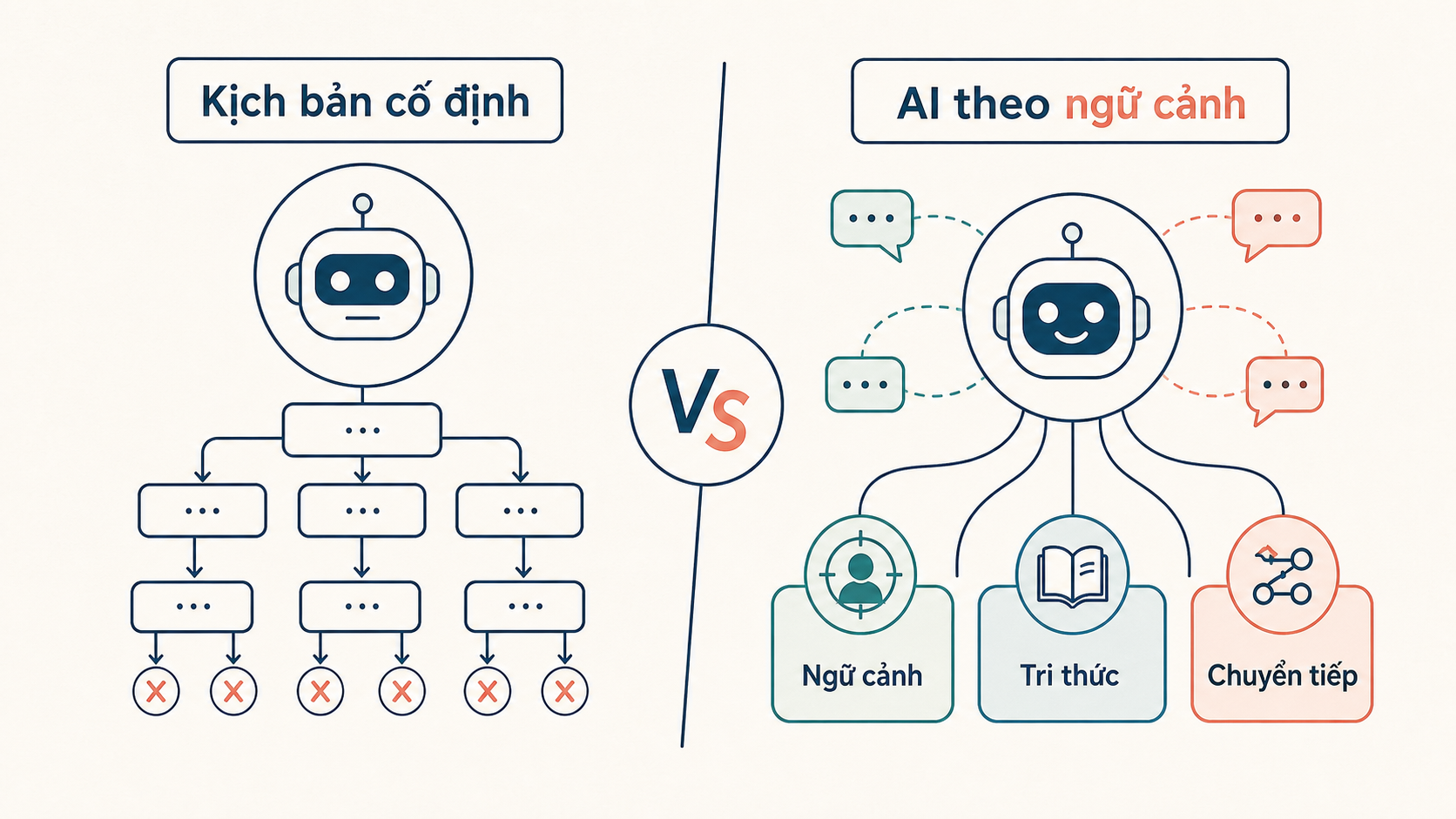
1. Rule-Based Chatbots

Rule-based chatbots operate according to pre-set scenarios and decision trees. They respond to users by matching questions with predetermined rules. This is a low-cost solution that is easy to deploy, but its ability to handle complex or out-of-script questions is limited.

2. AI Chatbots (AI-Powered Chatbots)

Chatbot AI applicationsMachine LearningandNatural Language Processing (NLP)to learn from user interaction data. Thanks to that, chatbots can create flexible, real-time and increasingly accurate responses. Currently, most modern chatbots integrate AI to improve customer care quality and user experience.

3. Context-Aware Chatbots

Context-aware chatbots have the ability to remember conversation history and user preferences. This allows the chatbot to personalize each conversation, providing a seamless, natural experience that closely resembles human-to-human interaction.

4. Voice-Enabled Chatbots

Voice chatbots use technologyvoice recognitionandvoice synthesisto communicate with users through audio. This type of chatbot is often used invirtual assistant, Automated switchboard (IVR)and telephone customer care systems.

5. AI Chatbots for businesses (Enterprise AI Chatbots)

Enterprise-grade AI chatbots are designed specifically for large organizations. They are capable of deep integration with internal systems such asCRM, ERPand other administration platforms to automate complex processes, support operations, sales and customer care at scale.

See more: How much does it cost to develop an AI Chatbot?

Core Features of Modern AI Chatbots

The remarkable advances in technology in the early 21st century have helped AI chatbots develop beyond the simple role of answering questions. Nowadays, AI chatbots work like theseSmart virtual assistant, has the ability to understand user needs, learn over time, and directly support businesses in achieving business goals. Below are the important features that make up a modern AI chatbot.

1. Advanced natural language understanding (NLU).

Today's AI chatbots are loaded with capabilitiesNatural Language Understanding (NLU)powerful, allowing accurate recognition of user intent and context, even when the question is incomplete, has grammatical errors, or uses casual, informal language.

2. Recognize context and remember conversations

Modern AI chatbots have the ability to remember information to maintain the flow of conversation throughout the interaction process. This memory inclshort term(in the same session) andlong term(over multiple interactions), making the user experience more seamless and natural.

3. Generate flexible responses using automated language modeling

The development of theLarge language models (LLMs)allowAI chatbotsgenerate accurate and appropriate responses in a variety of contexts. Chatbots can now handle complex, open-ended and deductive questions, instead of just relying on fixed scenarios as before.

4. Multi-language and localization support

A modern AI chatbot needs to be able to communicate in many different languages. At the same time, chatbots must also adjust tone, expression and cultural nuances to suit each specific market and user group.

5. Cross-platform operation, always ready

AI chatbot can interact with users on many different channels such as websites, mobile applications, social networks, messaging platforms or voice-controlled devices. User experience is guaranteed to be consistent, regardless of the platform on which they interact with the chatbot.

6. Seamless integration with third-party systems

Most AI chatbots today have the ability to connect withCRM, ERP, payment systems, ticketing tools, data analytics platforms and enterprise applications. Thanks to that, chatbots can retrieve real-time data, update information and even automatically perform transactions.

7. Personalize recommendations based on customer data

AI chatbots take advantage of data about customer behavior, preferences and interaction history to personalize feedback content, suggest appropriate products and offers. This helps increase engagement and improve conversion rates significantly.

8. Automate complex business processes

Not just stopping at chatting, modern AI chatbots are also capable of automating processes such as making appointments, processing orders, screening potential customers or internal approvals. Thanks to that, businesses can significantly reduce the amount of manual work and operating costs.

Other Advanced Features of Modern AI Chatbots

  • Continuous learning and self-improvement of performance

  • Advanced analytics and performance reporting

  • Enterprise-grade security and compliance

  • Scalability and high availability

  • Supports voice and multimodal interaction

  • Flexible custom conversation flows

  • Actively interact with users

  • High precision, low error rate

The above features show that modern AI chatbots are not only smart but alsoReady for the corporate environment, easy to expand and create practical value. In 2026, businesses are lookingAI development partnerhave the ability to deploy technology properly, deliver a seamless customer experience, optimize daily operations and create a sustainable competitive advantage in the market.

AI Chatbot Development Process
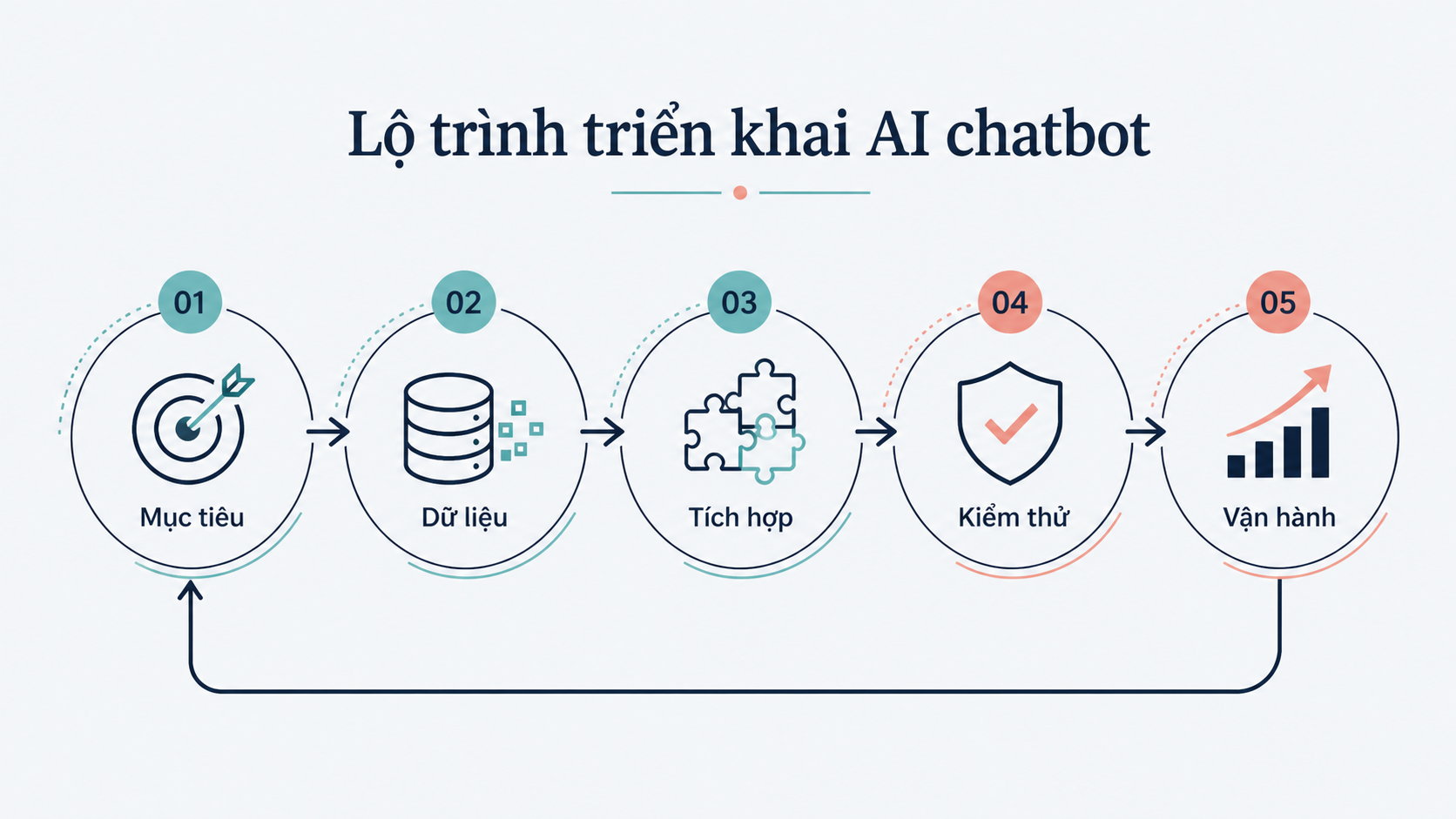
AI Chatbot Development Process

AI Chatbot development is a comprehensive project, requiring a deep understanding ofbusiness operating modelas well asbusiness goalsthat the chatbot needs to achieve. By clearly defining the direction from the beginning, businesses can build and deploy appropriate requirements for each chatbot, ensuring long-term effectiveness and future scalability.

Below are the important steps in the professional AI chatbot development process:

1. Analyze business requirements and goals

The first step in developing an AI chatbot is to comprehensively assess the needs of the business. For example, to build asales chatbots, businesses need to research the market, analyze competitors and identify sales strategies that help create a distinct advantage. This phase serves as the foundation for the entire project.

2. Choose platform and deployment channel

Choosing a chatbot should be based on the platform and communication method that the business wants to use to reach end users. Chatbots can be deployed on websites, mobile applications, social networks, messaging platforms or voice channels, depending on the behavior and habits of target customers.

3. Design conversation flow and user experience (UX)

User experience needs to be the focus right from the design stage. Enterprises must fully buildconversation flow, intention, entity, fallback scenarioanderror handlingto ensure users can interact with chatbots naturally, easily and effectively.

4. Collect data and build a knowledge base

AI chatbots need a source of high-quality training data to function correctly. Data can be collected fromFrequently asked questions (FAQ), customer support history, internal documents, APIs, and other related data sources. A solid knowledge base will help chatbots provide responses that are relevant, accurate, and contextually valuable.

5. Select and train an AI model

Model selectionNatural Language Processing (NLP)andMachine Learning (ML)Matching is the key factor. During this phase, the chatbot is trained with real-world data to optimize its ability to recognize intent, extract entities, analyze sentiment, and understand conversation context.

6. Back-end development and system integration

Chatbots need to be integrated with internal systems such asCRM, ERP, databases, payment gateways, analytics tools, and third-party APIs. This integration allows chatbots to retrieve data in real time, automate tasks, and ensure a seamless flow of business operations.

7. Testing, validation and quality assurance

Before official deployment, chatbots must undergo comprehensive testing, including functional accuracy, conversation flow, performance, security, and edge situations. Realistic interaction scenarios are also simulated to detect vulnerabilities, fix errors and improve system stability.

8. Official deployment and operation

After completing testing, the chatbot is deployed on selected platforms. At the same time, a monitoring system will be set up to monitor performance, uptime, response accuracy and user engagement from day one of operation.

9. Continuous monitoring, optimization and expansion

Once operational, the AI chatbot continues to be improved through data analysis, user feedback, and conversation logs. AI models will be retrained, added with new features, and scaled to meet increased traffic and evolving business needs.

A systematic development process helpsminimize risks, improve accuracy, Optimize scalabilityand bringHigh quality customer experience. By applying this process, businesses can build AI chatbot systems that are reliable, flexible, and ready to adapt to market changes and future customer needs.

Fundamental Technology in AI Chatbot Development

The selectiontechnology stacksuitable for AI chatbotsplays a key role in ensuring product performance, scalability and sustainability. In 2026, AI chatbot development no longer revolves around a single language or tool, but onecomplete technology ecosystem, requiring businesses to clearly understand each layer in the system architecture. Below are the core technology groups commonly used in modern AI chatbot development.

1. Programming language

This is the foundation layer, acting as the backbone of the entire development process. Programming languages ​​are used to build processing logic, manage requests, and connect components in the system.

  • Pythonoften preferred for its simple syntax and powerful AI/ML ecosystem.

  • JavaScriptsuitable for real-time chatbots and web-based chatbot applications.

The choice of language depends on project scale, performance requirements and system integration capabilities.

2. Natural language processing (NLP) framework

NLP frameworks allow chatbots to understand human language, including intent, context, and meaning.

  • For text processing and entity recognition, libraries like spaCy or NLTK are highly effective.

  • For advanced language tasks and generative responses, modern Transformer models play an important role.

3. Machine Learning & Deep Learning Library

AI chatbot learns from data and improves over time thanks to Machine Learning. Deep Learning libraries like TensorFlow or PyTorch are used to train and deploy AI models, helping chatbots overcome the limitations of rule-based logic and become intelligent, adaptive systems.

4. Generative AI and Large Language Models (LLMs)

Generative AI technology allows chatbots to generate natural, context-rich, and almost human-like responses. Thanks to the application of large language models (LLMs), chatbots can engage in deeper conversations, handle complex open-ended questions, and reduce dependence on fixed conversation scripts.

5. Framework & chatbot development platform

Chatbot frameworks help speed up the development process by providing out-of-the-box features like intent management, conversation orchestration, and system integration. This helps the development team shorten deployment time while still ensuring the stability and scalability of the chatbot.

Other Technology Components in AI Chatbot

  • Back-end layer and API

  • Database system and data storage

  • Cloud platform and storage infrastructure

  • User Interface (Frontend & UI)

  • Voice technology and audio processing

  • Performance monitoring and analysis tools

  • Security, privacy, and standards compliance

  • DevOps, CI/CD, and deployment tools

  • Testing and quality assurance tools

  • Integrate with Business Intelligence and enterprise AI systems

OneThe technology stack is properly chosenwill help AI chatbots achieve high performance, be easy to expand, ensure safety and security and bring outstanding user experience. On the contrary, the wrong choice can increase costs, limit the ability to upgrade and affect long-term performance. When partnering with an experienced development team, businesses can rest assured that the AI chatbot is built uponcurrent actual needsandindustry best practices, ready to grow with the business in the future.

AI Chatbot Application Cases by Industry

AI chatbots are increasingly widely appliedAutomate communication, enhance customer experienceandensure smooth operation of daily operations. Below are typical AI chatbot use cases by industry, helping businesses make appropriate and effective deployment decisions.

1. E-commerce & Retail

AI chatbot helps customers find products quickly, provide personalized suggestions, track orders, support returns and payment instructions. Thanks to this, businesses can reduce cart abandonment rates, increase conversions and provide seamless 24/7 shopping services.

2. Banking & Financial Services

In the financial sector, chatbots help users check account balances, view transaction history, block debit or credit cards, evaluate loan eligibility and receive fraud alerts. Chatbots improve customer care efficiency while ensuring financial transactions take place safely, quickly and on demand.

3. Health & Life Sciences

AI chatbot supports appointment scheduling, initial symptom assessment, medication reminders, and post-treatment monitoring. This solution reduces administrative work for medical teams, increases patient engagement, but does not replace the role of healthcare professionals.

4. Education & E-learning

Chatbot supports students in registering for courses, looking up exam schedules, accessing study materials and answering questions. Thanks to personalization, chatbots help enhance the learning experience, increase engagement, and improve learner retention rates.

5. Travel & Hotel

AI chatbot supports customers in making reservations, changing schedules, canceling services and recommending suitable experiences. With the ability to provide instant support before, during and after the trip, chatbots contribute to improving the tourist experience and optimizing the service booking process.

6. Real estate

In the real estate sector, chatbots help screen potential customers, schedule tours, answer questions about projects and provide selling price information. This allows the brokerage team to focus on high-quality clients while maintaining a constant level of engagement.

7. SaaS & Technology Business

AI chatbot supports onboarding new users, introducing product features, troubleshooting technical issues, and managing subscriptions. Deploying chatbots helps reduce the number of support tickets, while increasing customer adoption and product usage rates.

Other Industries Also Apply AI Chatbot Effectively

  • Manufacturing & Supply Chain

  • Human Resources & Recruitment

  • Insurance

  • Media, Entertainment & Games

  • Telecommunications

  • Logistics &Transport

  • Legal services & professional consulting

  • State agencies & public services

The above examples show that AI chatbots are no longer limited to a specific field but have becomeFlexible solutions for many different industries. When deployed properly, AI chatbots help businesses improve operational efficiency, improve customer experience and create sustainable competitive advantages in the digital era.

Benefits of Deploying AI Chatbot

Benefits of Deploying AI Chatbot

Invest inDevelop AI chatbot as requiredbrings many practical benefits to businesses, not only in terms of customer care but also in operations, sales and long-term growth strategy. Below are the outstanding benefits when implementing AI chatbots.

1. 24/7 customer support

AI chatbot is always ready to serve customers anytime, anywhere. Users receive instant responses, regardless of time zone or support team hours, improving overall satisfaction and experience.

2. Reduce operating costs

By automating repetitive questions, chatbots help reduce pressure on customer service departments and limit the need to expand staff. Businesses can save costs while still maintaining stable service quality.

3. Quick response, effective handling

Chatbots have the ability to instantly respond to simple requests such as order confirmation, delivery status or service information. This increases resolution rates on the first interaction and significantly improves customer satisfaction.

4. Enhance customer experience (CX)

AI chatbots deliver seamless, accurate, and personalized interactive experiences. By understanding user needs, chatbots can provide appropriate responses, contributing to building a positive relationship between brands and customers.

5. Easy to expand without additional resources

AI chatbots can handle thousands of conversations simultaneously. Businesses can easily scale up support during peak periods without needing to recruit additional personnel or significantly increase costs.

Other Benefits of AI Chatbots

  • Personalize user interactions

  • Automate repetitive tasks

  • Improve lead generation and screening efficiency

  • Increase sales and revenue growth rate

  • Collect data and analyze valuable insights

  • Maintain a consistent brand message

  • Multi-channel interaction with customers

  • Improve employee productivity

  • Reduce human errors, increase accuracy

  • Accelerate business process processing

  • Easily integrates with enterprise systems

  • Improve customer retention and loyalty

  • Create competitive advantage in the market

  • Continuously learn and optimize performance

  • Ready for a long-term digital transformation strategy

The above benefits show that AI chatbots are not just a support tool, but alsostrategic leveragehelps businesses optimize costs, improve customer experience and achieve sustainable growth. To achieve maximum efficiency, businesses should cooperate withLeading chatbot development company, capable of providing high-quality solutions that are easy to scale and support long-term maintenance.

Cost of AI Chatbot Development

The cost of developing an AI chatbot is not fixed but depends on many factors such as:project goals, level of complexity, request feature, number of integrations, position and experience of the development team. Below are the estimated costs for each popular chatbot level today.

1. Basic Chatbots (Basic Chatbots)

Basic chatbots usually cost from125 million – 375 million VND.
This type of chatbot meets platform features such as scripted question answering, simple request processing, and quick deployment. This is the right choice forstartupandsmall businessJust started using chatbots.

2. Mid-level Chatbots

Mid-level chatbot development costs range from375 million – 750 million VND.
Chatbots at this level are suitable for businesses that are expanding and need moresystem integration, more flexible conversation handling and improved user experience.

3. Advanced & Enterprise Chatbots

Advanced chatbots or enterprise-level chatbots cost from750 million – 1.25 billion VND.
These are complex, fully integrated systemsModern AI features, Generative AI, deeply connect to business systems and automate many important business processes.

Summary Table of AI Chatbot Development Costs (VND)

Chatbot level Estimated cost
Basic (Basic) 125 – 375 million VND
Mid-level 375 – 750 million VND
Advanced / Enterprise (Advanced) 750 million – 1.25 billion VND

The right choicechatbot levelright from the start will help businessesbudget optimization, shorten implementation timeandeasy to expand in the future. By partnering with an experienced development team, businesses can build AI chatbots that not only fit their current needs but are also ready to upgrade as their business strategy evolves.

Challenges in AI Chatbot Development & How to Solve It

Although it brings many benefits, the process of developing AI chatbots also poses many challenges for businesses. Properly identifying these difficulties and having an appropriate solution strategy will help the chatbot operate effectively, stably and bring long-term value. Below are the most common challenges and their respective solutions.

1. Difficulty in accurately understanding user intent

Users can phrase the same question in different ways, causing ambiguity for the chatbot. To improve intent understanding, it is necessary to useHigh quality training data, Advanced NLP modeland continuously refine the intent set based on the actual conversation context.

2. Handle complex and multi-step questions

Questions that are long, have many ideas, or require sequential processing are big challenges for chatbots. An effective solution is to build a capable chatbotremember the previous context, understand the connection between questions and respond consistently throughout the conversation.

3. Lack or poor quality of training data

Poor quality data will lead to inaccurate responses and poor user experience. Business should be continuousFollow actual conversations, collect user feedback and supplement training data to improve the chatbot's accuracy over time.

4. Maintain conversational context

Many chatbots have the problem of "forgetting" previously exchanged information, causing answers to become fragmented or repetitive. Applicationsession memoryand mechanismlong-term context storagewill help chatbots maintain a more natural and seamless conversation flow.

5. Integrate with existing systems

Connecting chatbots to existing systems such as CRM, ERP or legacy systems often faces many technical obstacles. The optimal solution is to usemodule architectureandAPI-based integration, making chatbots easily scalable, flexible and compatible with many different platforms.

Other Challenges in AI Chatbot Development

  • Ensure privacy and data security

  • Managing multiple languages and regional differences

  • User experience (UX) design is not optimal

  • Excessive automation but lack of human support

  • Responses were inconsistent with brand tone

  • Performance and scalability issues

  • High development and maintenance costs

  • The need for continuous training and updating of AI models

Early identification and proper handling of the above challenges will help businesses buildAI chatbot is stable, intelligent, and easy to scale, while delivering a high-quality user experience. Partnering with an experienced AI development team is key to ensuring chatbots not only operate effectively today but are also ready to adapt to future business needs.

Future Trends of AI Chatbot

In the period from 2026 onwards, AI chatbots will continue to develop strongly, becoming a core part of businesses' digital transformation strategies. Below are important trends that businesses need to grasp when developing AI chatbots:

  • Chatbots have emotional intelligence
    AI chatbots are increasingly capable of recognizing users' emotions, moods and attitudes in real time, thereby adapting responses to better suit the communication context.

  • Generative AI is widely applied
    Generative AI technology will help chatbots create natural, flexible and highly impromptu conversations, reducing dependence on fixed scripts.

  • Multimodal Interaction
    Chatbots will simultaneously support multiple forms of interaction such as text, voice, images and video, providing a more comprehensive and intuitive communication experience.

  • Conversational interface replaces traditional UI
    Modelvoice-firstandconversational UIgradually becoming a new interface standard, replacing complex graphical interfaces in many digital applications.

  • AI Agents operate autonomously
    Instead of just responding, AI chatbots will evolve into...AI agentsAble to make decisions and complete tasks independently without constant human intervention.

  • Hyper-personalization experience
    Chatbots will deeply exploit behavioral and contextual data to provide highly personalized experiences, tailored to each specific user.

  • Industry-specific chatbots
    AI chatbot will be trained with in-depth data sets for each field, helping to improve accuracy and application value in each specific industry.

How to Choose the Right AI Chatbot Development Company
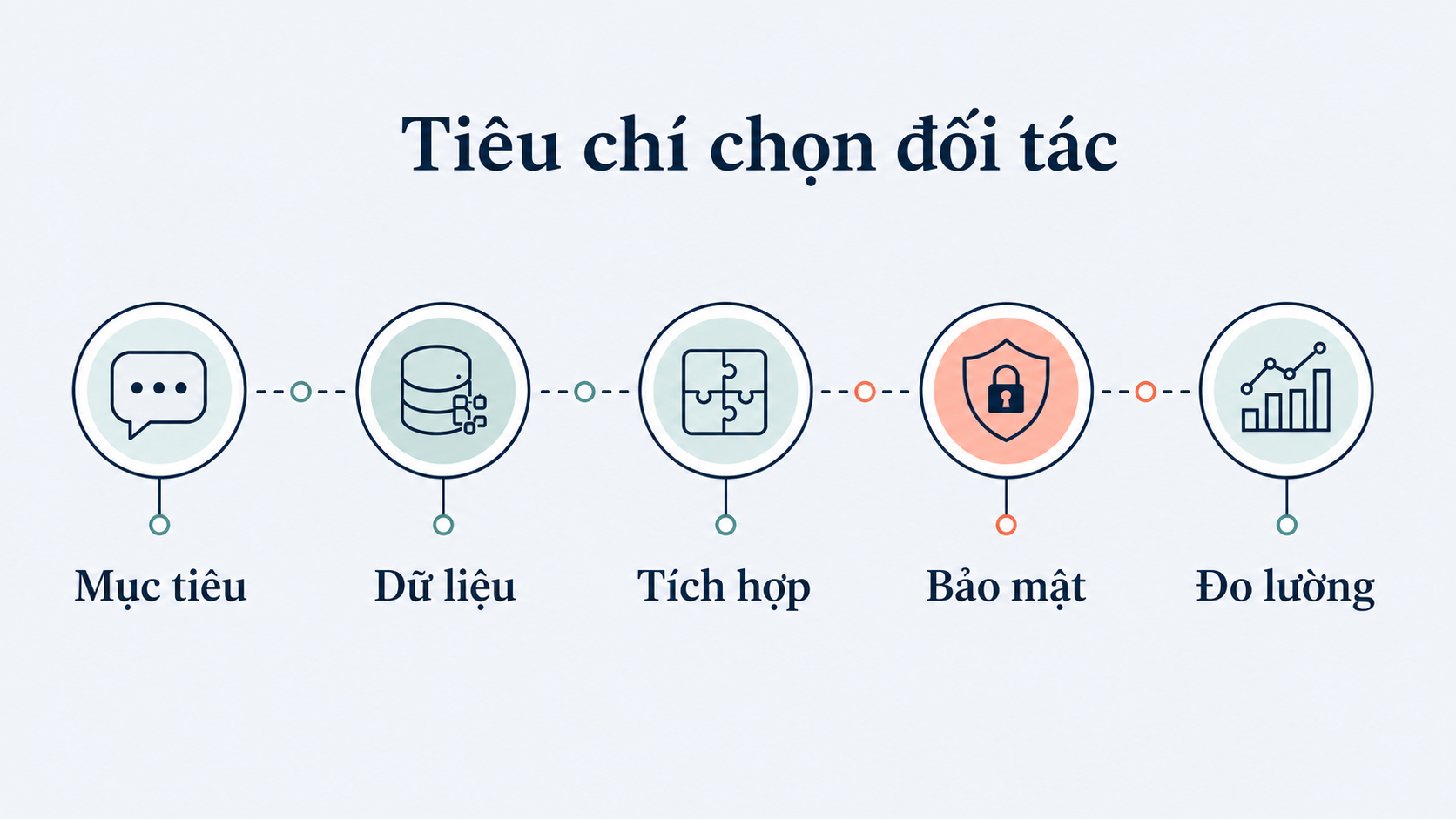
How to Choose the Right AI Chatbot Development Company

Choosing the right AI chatbot development partner is decisive for the scalability and long-term success of the business. Cheap does not mean effective. Businesses need to balance betweenreasonable costandimplementation quality. Before collaborating, consider the following criteria:

  • Have practical experience in AI chatbot development

  • Clear list of projects and case studies

  • In-depth capabilities in NLP, Machine Learning and Generative AI

  • Ability to build custom chatbots as required

  • Understanding of specialized chatbots

  • Providing end-to-end development services

  • Supports enterprise-grade scalability

  • Focus on UX and conversation flow design

  • Transparent quotes, clear cost structure

  • Flexible cooperation and leasing model

  • Strict testing and quality assurance process

  • Operation and maintenance support after deployment

A reputable AI development partner will help businessesBuild a sustainable chatbot strategy, easily integrates with the AI ecosystem and popular smart applications of the future.

Conclusion

In the context of the rapidly growing digital market, AI chatbots have becomeAn indispensable element for every digital business. From enhancing customer experience, automating processes to optimizing operational efficiency, AI chatbots are creating value across almost every industry.

However, to achieve real efficiency, businesses need onemethodical strategy, appropriate technological infrastructureand especiallyExperienced development partner. A professional AI chatbot development company can help you build chatbot solutionsSmart, safe, easy to expand, tailored for specific business goals.

If you are aiming to develop the next generation of AI chatbots, docsAI Chatbot Development Guide 2026This will give you a comprehensive view of the process of planning, building and deploying chatbots in the future.

Start your journey with the same AI chatbottrusted development partnerwill be a strategic step, helping businesses create creative, effective and sustainable chatbot solutions for many years to come.

Contact Winterfrost immediatelyfor free consultation and receive Ai - App design - full Website design incentives today!

Frequently Asked Questions (FAQ)

1. Is AI chatbot suitable for small businesses?

Yes. Small businesses and startups can deploy AI chatbots at a basic level to automate customer support, answer FAQs, and collect leads at a reasonable cost, then gradually expand as the scale grows.

2. Can AI chatbot completely replace customer service staff?

No. AI chatbots help handle repetitive and simple requests, while complex situations still require human intervention. The most effective model is to combine AI chatbots and human resources to optimize costs and customer experience.

3. How long does it take to develop an AI chatbot?

Development time depends on the level of complexity. Basic chatbots can be completed in 4–6 weeks, mid-level chatbots take 2–3 months, while enterprise-level chatbots can take 3–6 months or longer.

4. Can AI chatbot integrate with existing systems?

Yes. Modern AI chatbots can integrate with CRM, ERP, payment systems, customer management software and third-party APIs to retrieve real-time data and automate business processes.

5. Is AI chatbot safe and data secure?

If built properly, AI chatbots can meet enterprise-level security requirements, including data encryption, access authorization, and compliance with current security and privacy standards.

6. Does AI chatbot support Vietnamese and multilingual?

Yes. Modern AI chatbots support Vietnamese and many other languages, and are capable of localizing tone, expression, and cultural context for each market.

7. Should businesses choose scripted chatbots or AI chatbots?

Scripted chatbots are suitable for simple needs and low budgets. AI chatbots are suitable for businesses that want to expand and personalize experiences and handle complex conversations. The choice depends on the goals and stage of development of the business.

8. Is the cost of operating an AI chatbot high?

Operating costs are typically lower than traditional personnel costs. In addition to infrastructure and maintenance costs, AI chatbots provide significant long-term cost savings through automation and scalability.

Latest article

See all
What is UI/UX? Important Meaning of UI/UX Design For Website
UIUX Design

What is UI/UX? Important Meaning of UI/UX Design For Website

UI and UX are not only aesthetic factors but also the foundation that determines the business performance of websites, applications and digital products. A professional UI design helps create a strong impression, increasing brand recognition, while optimal UX helps users easily find information, take actions and maintain satisfaction throughout the usage process. The harmonious combination of UI and UX not only enhances customer experience but also contributes to improving conversion rates, increasing SEO efficiency, reducing operating costs and creating sustainable competitive advantages for businesses in an increasingly fierce digital environment.

Mỹ Uyên30/10/2025 3K
Guide to Effective CRM Implementation: Notes That Cannot Be Ignored
Software

Guide to Effective CRM Implementation: Notes That Cannot Be Ignored

CRM software is not only a customer data management tool but also a strategic platform that helps businesses systematically optimize the entire sales, marketing and customer care process. Effective CRM implementation requires a combination of a clear strategy, the right processes and a people-centric element, rather than just a focus on technology. When choosing the right type of CRM (Cloud, On-Premises or customized) and applying it flexibly according to business characteristics, CRM will help enhance customer experience, increase operational efficiency and create sustainable growth during the digital transformation process.

Trâm Anh24/07/2026 2.7K
What is WordPress? Advantages and disadvantages? Why should you use it for web design?
Website

What is WordPress? Advantages and disadvantages? Why should you use it for web design?

Master the most popular website building platform on the planet to turn any idea into reality without needing in-depth programming knowledge. This article will help you fully understand the power of WordPress, from optimizing costs, breaking stereotypes about performance, to how to choose the right platform to start your journey to conquer the digital space in the most professional and effective way.

Gia Minh02/11/2025 2.6K
Developing a Startup MVP: A Detailed Step-by-Step Guide From A–Z
Startups

Developing a Startup MVP: A Detailed Step-by-Step Guide From A–Z

Developing an MVP is not only a way to save costs but also a core strategy to help startups quickly verify ideas, reduce risks and shorten time to market. By focusing on the most important features, gathering feedback from real users, and continuously improving based on data, businesses can build products that meet their needs instead of relying on assumptions. A properly deployed MVP not only helps optimize resources but also creates a solid foundation to expand, attract investors and move towards sustainable product-market fit.

Mỹ Uyên17/12/2025 2.2K
What is JavaScript? Reasons to use JavaScript when designing websites
Technology

What is JavaScript? Reasons to use JavaScript when designing websites

JavaScript is not only a popular programming language but also the core foundation that helps modern websites become more interactive, flexible and rich in user experience. From animation effects, real-time data processing to developing complex web applications, JavaScript plays an important role in both interface (UI) and user experience (UX). Despite some performance and security challenges, JavaScript is still an indispensable technology in every professional website design project today.

Trâm Anh16/07/2026 1.9K
Gemini 3.6 Flash and Google Antigravity – Optimal solutions for programming
AI

Gemini 3.6 Flash and Google Antigravity – Optimal solutions for programming

The Gemini 3.6 Flash model is optimally designed by Google for automated processing loops in software development. When combined with the Google Antigravity platform, the system supports multi-agent AI coordination, automatic error correction, and asynchronous command execution. The model reduces redundant token output by 17% thanks to a concise inference mechanism, which increases response speed and saves 16.6% in API costs compared to its predecessor. The model's knowledge data is updated until 2026. The operating price is set at 1.50 USD for 1 million input tokens and 7.50 USD for 1 million output tokens, supporting optimal operating costs for integrated systems and automatic deployment.

Gia Minh20/08/2026 1.2K

Connect With Us

Cooperation Contact

Or send mail directly to:

  • Quick response within 24h.

  • Work directly with experts.

  • Clear strategic consulting.

Contact Winterfrost - Vietnam's leading technology solution
BotWinterfrost
Hello, how can we help you?
Contact project consulting via Zalo - Winterfrost