CRM software(Customer Relationship Management)More and more businesses are interested, regardless of large or small scale. Applying a CRM system is not only a trend, but also a strategic step to improve customer management efficiency and optimize business operations.
SoWhat is CRM?Why workImplement CRM softwareplays an important role in modern businesses?Let's explore details with Winterfrost in the content below.
What is CRM? Overview of customer relationship management software system
What is CRM?
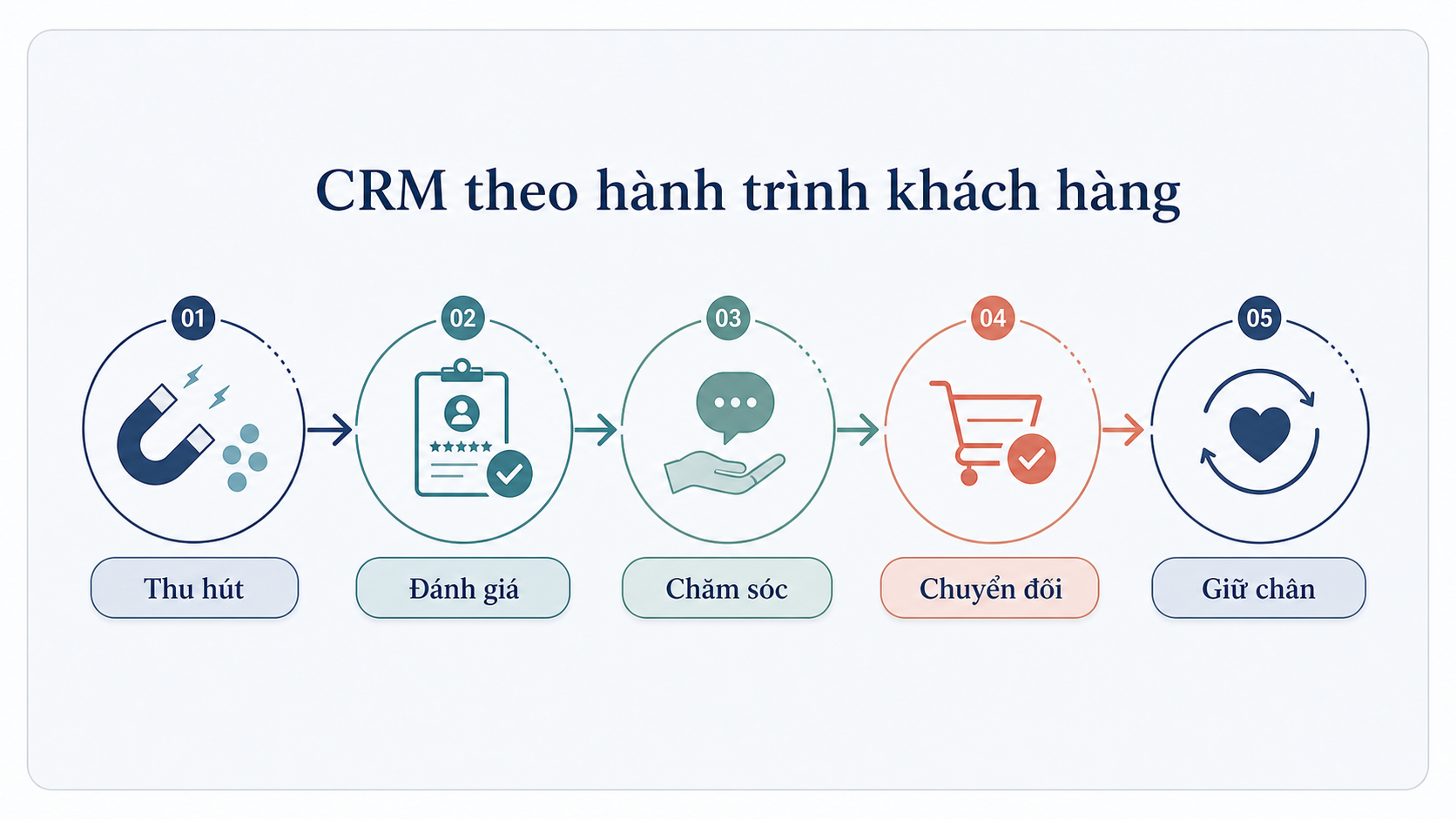
CRM (Customer Relationship Management)– akacustomer relationship management– is a term formed in the twentieth century, when businesses began to shift their focus from products to customers.
CRM software refers to a system that helps businessescustomer data management, Optimize care activities, Increase remarketing effectivenessandbuild lasting relationshipswith customers. This is an important tool to enhance the experience and maintain customer engagement with the brand.
Two core elements when implementing CRM in an enterprise
To apply CRM effectively, businesses need to pay attention to two main pillars:
-
CRM Strategy:
Is the overall orientation on how to organize and deploy management, interaction and customer care methods. This strategy should include how to reach potential customers (leads), retain current customers, and restore customers who have left. -
CRM process:
Is how businesses build and operate working processes with each customer file - from choosing software, setting up systems, to applying automation tools to effectively collect, classify, care for and track customers.
What does the CRM software system include?
Based on the above mentioned concept,CRM softwareis a business support toolManage and develop relationships with customers effectively. This is not simply data storage software, but also a comprehensive system that helps:
-
Optimize customer care process (CSKH)
-
Increase customer satisfaction and loyalty
-
Improve sales performance and marketing activities
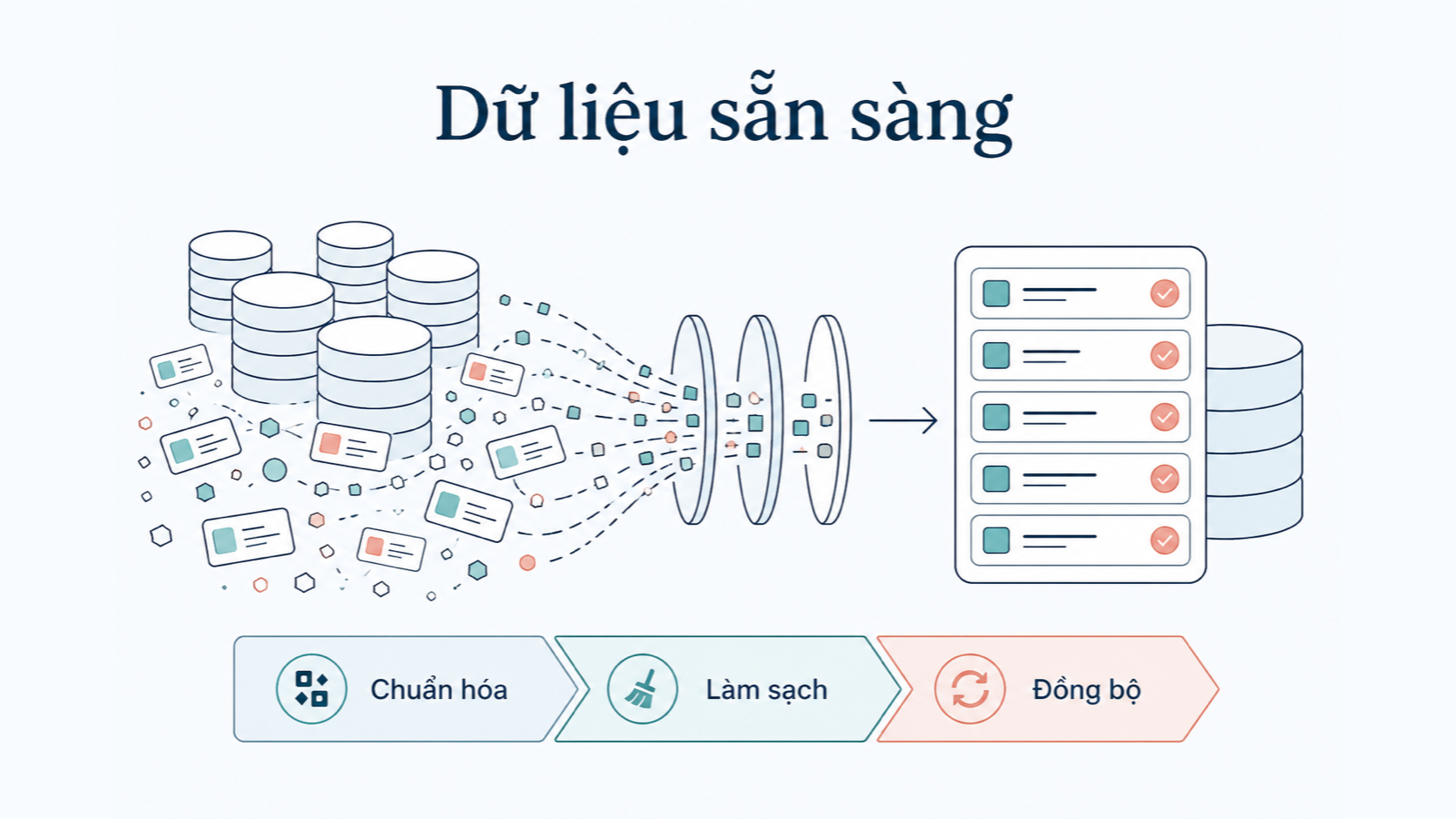
CRM software acts asCustomer data storage and analysis center, from basic information to shopping behavior, frequency of interactions, feedback and underlying needs. From there, businesses can easily:
-
Analyze consumer behavior and trends
-
Identify potential customer groups
-
Adjust products/services accordingly
-
Measure the effectiveness of marketing campaigns
-
Customize advertising content for each segment
In short, implementing a CRM system properly will help businessesenhance customer experience, strengthen brand reputationandsustainable revenue growth.
Popular types of CRM software today
Currently, CRM software is classified mainly based on deployment platform and operating technology. Each type of CRM has its own characteristics, suitable for each size and business need:
1. On-Premises CRM (internally installed CRM)
This is a form of software that is deployed directly on the business's internal server. EnterpriseFull control over data, operational and security systems.
Advantages:
-
Separate data management, not dependent on third parties
-
Ensure high security
-
One-time fee, no annual maintenance costs
Disadvantages:
-
Initial implementation costs are high
-
Need IT team to maintain and troubleshoot
-
There is no possibility of automatic updates
2. Cloud CRM (cloud computing CRM)
Cloud CRM is software provided as an online service. Businesses can access and use anytime, anywhere via an Internet connection.
Advantages:
-
Quick deployment, easy to operate
-
Suitable for small and medium businesses
-
No need to invest in server infrastructure
Disadvantages:
-
Fees must be paid monthly or annually
-
Data depends on the provider
-
Difficult to control if a security incident occurs
3. Open-Source CRM (open source CRM)
Is CRM software with public source code, allowing businessesCustomize and develop yourselfon-demand features (e.g. Odoo, SuiteCRM).
Advantages:
-
Flexible customization according to individual processes
-
No software license costs
-
Strong community support
Disadvantages:
-
Requires a specialized technical team
-
Compatibility errors with existing systems may arise
-
It takes a long time to configure and deploy stably
4. Social CRM (CRM integrated with social networks)
Social CRM is a CRM model that integrates social networking platforms such as Facebook, Instagram, TikTok, Twitter, LinkedIn... to help businessesCommunicate and manage customer relationships through social media channels.
Advantages:
-
Quickly record customer interactions
-
Understand behavior, habits, and social feedback
-
Optimized for multi-channel marketing and customer care campaigns
Disadvantages:
-
Centralized control is difficult without a good data classification process
-
Depends on the social network's algorithm and changing policies
Note:Businesses should choose the appropriate type of CRM software based on the scale of operations, level of technology understanding and investment budget to ensure long-term implementation effectiveness. If necessary, Winterfrost can advise on solutions suitable for your current system.
Important notes when implementing CRM software
Common challenges when implementing CRM
Through the process of implementing many CRM projects for businesses in Vietnam, Winterfrost realized one fact:Even though businesses have invested in popularizing knowledge and processes for using CRM, many employees are still not very enthusiastic about supporting it..
Some common responses from HR include:
-
“Work is constrained, feels mechanical and no longer creative”
-
“Fear of being replaced by automation systems”
-
“The data entry process is complicated and time-consuming”
-
“Software is dry and difficult to use”
This is the barrier that hinders many CRM projectsSlow implementation and ineffective operationsor even "abandoned" after a short period of use.
Employees object to the crm system
Key factor: CRM must serve people
The most important thing when implementing CRM is not only...Modern technology or superior features, which iscompatibility with people and corporate culture.
A truly effective CRM system is one that:
-
Easy to useand does not put pressure on users
-
Fits into existing workflows, instead of forcing changes too suddenly
-
Customized based on actual internal user feedback
Instead of imposing a top-down system, businesses should:
-
Organize a survey to get staff opinions before and after implementation
-
Closely monitor difficulties and problems during use
-
Customize and periodically train to help employees grasp and become familiar with CRM
CRM is not a software that replaces people, but a toolSupport and improve human performance. Therefore, the key to successfully implementing CRM lies in:put the human factor at the center– listen, adjust and accompany HR throughout the transition process.
Deploying CRM - Flexibility and suitability are the keys
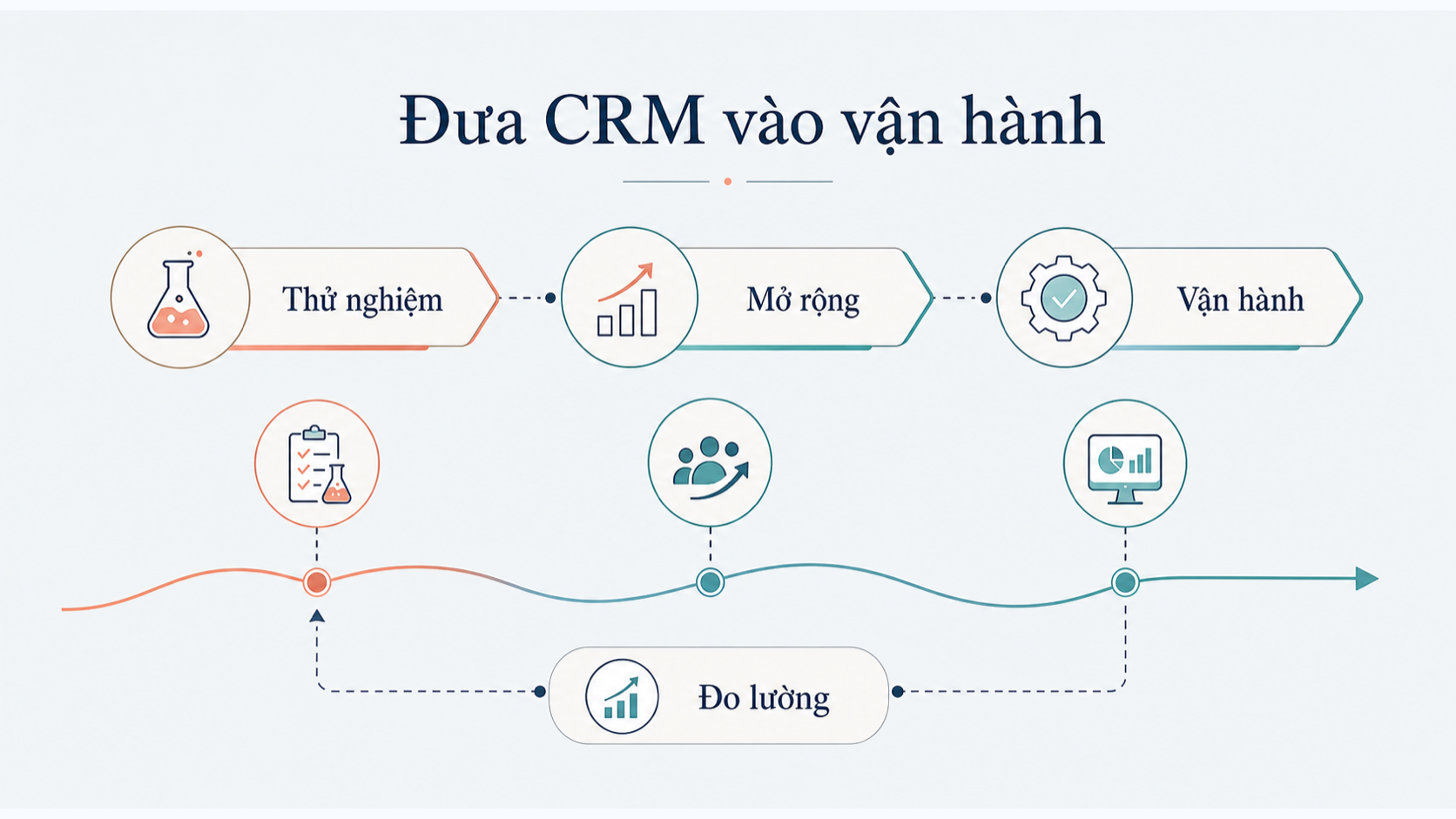
Through the article, you have understood clearlyWhat is CRM?, thepopular type of CRM software, as well as theseImportant notes when implementingto ensure practical effectiveness.
A good CRM system does not have to be complicated or copied from a large enterprise.It's important to be rightin accordance with the actual needs and processes of your business.
👉 Let's start by clearly defining:
-
What features do you need?
-
Who will be the main users?
-
How is the interface intuitive and easy to use?
-
Which process helps employees operate the fastest and most conveniently?
Then, send that request toWinterfrostVietnam – we will advise and design oneoptimal CRM solution, simple - effective - best suited to the specifics of your business operations.
ContactGet free consultation now and receive the most suitable CRM implementation solution!
Winterfrost – Partner accompanying businesses on their journeydigital conversion.
Winterfrost – Website Design –Software Design – App Design– Leading digital transformation – Sustainable technology solutions for modern businesses.
Frequently asked questions about CRM software
1. What is CRM?
CRM (Customer Relationship Management) is a system that helps businesses manage customer information, optimize care, increase sales and maintain long-term relationships with customers.
2. What are the main benefits of CRM software?
CRM helps:
-
Store and analyze customer data
-
Optimize sales and customer care processes
-
Increase employee performance
-
Improve customer experience and satisfaction
3. Should small businesses use CRM?
Yes. CRM helps small businesses manage customers better, increase marketing and sales efficiency without investing too much in human resources.
4. How to differentiate between On-Premises CRM and Cloud CRM?
-
On-Premises:Installed on an internal server, high security but high investment cost.
-
Cloud CRM:Used via the internet, flexible and easy to deploy, suitable for small and medium businesses.
5. How long does it take to implement CRM software?
Implementation time depends on complexity and business size. Usually:
-
Cloud CRM: 1–4 weeks
-
On-Premises or custom CRM: 2–3 months or more
6. What are common mistakes when implementing CRM?
-
Choose software that doesn't fit your internal processes
-
Lack of consensus and staff training
-
Poor change management, leading to employees not using CRM effectively
7. Can CRM integrate with other software?
Yes. Most modern CRM systems can integrate with accounting software, email marketing, call centers, ERP systems, and many other tools.
8. Does CRM support customer behavior analysis?
Yes. Modern CRM can collect and analyze data to provide behavioral suggestions and purchasing trends, helping businesses optimize marketing and sales campaigns.
Contact information:
- Address: Vinhomes Grand Park, District 9, Ho Chi Minh City, Vietnam.
- Hotline: 097 145 04 54
- Winterfrost – AI Development – Website Design – App Design – Contact for consultation.