Contact information:
- Address: Vinhomes Grand Park, District 9, Ho Chi Minh City, Vietnam.
- Hotline: 097 145 04 54
- Winterfrost – AI Development – Website Design – App Design – Contact for consultation.
Starting a business is always an exciting journey but also comes with countless uncertainties. One of the biggest questions any founder faces is:How to turn a great idea into a product that customers actually want to use?
Instead of spending months or even years building a complete product with full features,MVP developmentoffers a smarter route. By creating a streamlined version of your web app, mobile app or software that focuses on only the core features you can:
-
Verify ideas from the beginning
-
Collect real feedback from users
-
Adjust products according to market needs
-
Avoid wasting resources on unnecessary features
In this guide we will explore:
-
Why MVP development is a game-changing strategy for startups
-
How to build an MVP the right way
-
And how to cooperate with a company specializing in MVP development likeWinterfrosthelps you create products that are truly suitable for users, paving the way for long-term sustainable development.
Let's get started.
What is MVP in Startup?
MVP (Minimum Viable Product) is the versionmost streamlinedof a product, including only enough core features so that early adopters can experience, test, and validate your business idea.
For startups, the MVP building method is especially important because it helps you:
-
Verify assumptions before making large investments
-
Understand what users really need
-
Collect actual data to guide development
-
Reduce financial and technical risks
-
Ensure products match market needs
Instead of spending months building a fully featured product, an MVP lets youLearn quickly – adjust quickly – avoid costly mistakes.
For example:
-
MVP of web appIt may only include account registration, basic content sharing, or a simple dashboard, while advanced features such as data analysis or automation will be implemented later.
-
MVP of mobile appoften prioritize smooth navigation and a few important tasks like booking, placing orders, or tracking statuses enough to gauge interest and get feedback.
MVP-focused developmentsolve a central problemwith a minimal number of features, and leave complex integrations or advanced functionality for future versions.
In short,MVP is the most effective way for startups to test ideas early and build products that users really want to use.
Benefits of MVP Development for Startups
Startups operate in environmentsFast fluctuations – high risks – limited budget. Therefore, partnering with an experienced MVP development company is one of the smartest moves. MVP helps validate ideas, save resources and shorten the time to product–market fit.
Here are the most prominent benefits:
1. Verify market demand
Building a complete product without knowing whether the market really needs it or not is a common mistake of startups. Even great ideas may not coincide with actual user needs.
MVP allows you to test early and gain important insights:
-
Are users willing to pay for the solution?
-
Does the product solve the right problem?
-
Which features are really important to users?
Practical example:
Dropbox initially had just a simple introductory video as its MVP but attracted tens of thousands of signups, validating demand before the product was built.
2. Save time and costs
Developing a complete product consumes a lot of resources, which most startups do not have. MVP focuses on the most core features, helping to reduce costs and speed up progress.
Benefits:
-
Avoid building redundant features that users do not need
-
Invest in the right innovations that deliver real value
-
Reduce financial risks in the early stages
Figures:
According to CB Insights,38% of startups fail because they run out of capitalMVP helps limit this risk by reducing initial costs.
3. Get to market faster
Speed is an important competitive advantage. MVP helps you reach users early, gain traction, and improve your product before competitors catch up.
With MVP, startups can:
-
Quickly respond to user needs
-
Attract early adopters
-
Learn from real usage behavior instead of assumptions
For example:
Twitter was initially just an extremely minimalist platform with a limit of 140 characters, but enough to create attraction and develop into a global social network.
4. Iterative development – based on users
Instead of guessing at features, MVP promotes incremental development based on real-world feedback.
Benefits:
-
Identify features that are prioritized by users
-
Remove unnecessary functions
-
Continuously optimize products according to market needs
For example:
Instagram started out as a place check-in app. Based on user feedback, the team shifted its focus to photo sharing and exploded growth.
5. Increase ability to raise capital
A working MVP proves that the idea is viable. Investors like startups:
-
There are signs of product–market fit
-
Ability to build and deploy products
-
Has traction (users, signups, initial revenue)
For example:
Airbnb started with MVP as a simple website listing the founder's own rooms and that was enough to convince investors to expand globally.
6. Reduce business risks and product risks
Launching a finished product without testing is extremely risky. MVP helps you detect:
-
Is the product technically feasible?
-
How do users react?
-
Weaknesses in the business model
For example:
Zappos tests demand for online shoe purchases by... posting pictures of shoes from local stores, with no initial inventory.
Launch Your Startup With an Effective MVP
Our team partners with your startup to build an MVP that aligns with your vision, validate your assumptions quickly, and accelerate your growth journey.
Ready to turn ideas into real products? Let's build your MVP.
Different Types of MVPs in Startups
MVPs come in many different forms, each suited to different goals, budgets, and idea validation stages. Below is an overview of the most common types of MVPs, how they work, and when they should be used.
1. Concierge MVP
Concierge MVP eliminates the technology element and replaces it with a manual service.
How it works:
-
You directly provide the service to the first users.
-
Every operation is "personalized" based on their needs.
Suitable when:
-
You want to verify whether the solution brings real value without needing to develop software.
-
This is an effective way to deeply understand user behavior, expectations and pain before starting to build a product.
2. Wizard of Oz MVP
This MVP looks like a fully automated product, but the back end is still operated manually.
How it works:
-
Users interact with the interface just like the real product.
-
Behind the scenes, your team manually handles what the “system” seems to do automatically.
Suitable when:
-
You need to validate a complex idea that requires a lot of techniques.
-
Helps measure demand before investing in building a costly automation system.
3. Single-Feature MVP
An MVP is focusedonly one core feature, solving the user's central problem.
How it works:
-
Only build the one feature that has the biggest impact.
-
Launch quickly to test demand for core value.
Suitable when:
-
You want to verify that the main idea is not "diluted".
-
You compete in a crowded market with a breakthrough feature.
-
You want to gather accurate feedback on the most important features.
4. Piecemeal MVP
This type of MVP combines existing tools, templates, and services to create a working product without having to build it from scratch.
How it works:
-
Use WordPress, Google Forms, no-code platforms or third-party APIs.
-
Pair them together to create an experience similar to the finished product.
Suitable when:
-
You want to launch quickly with minimal development effort.
-
You want to save costs by taking advantage of available tools.
-
You need to test user behavior before building a custom version.
5. High-Fidelity MVP
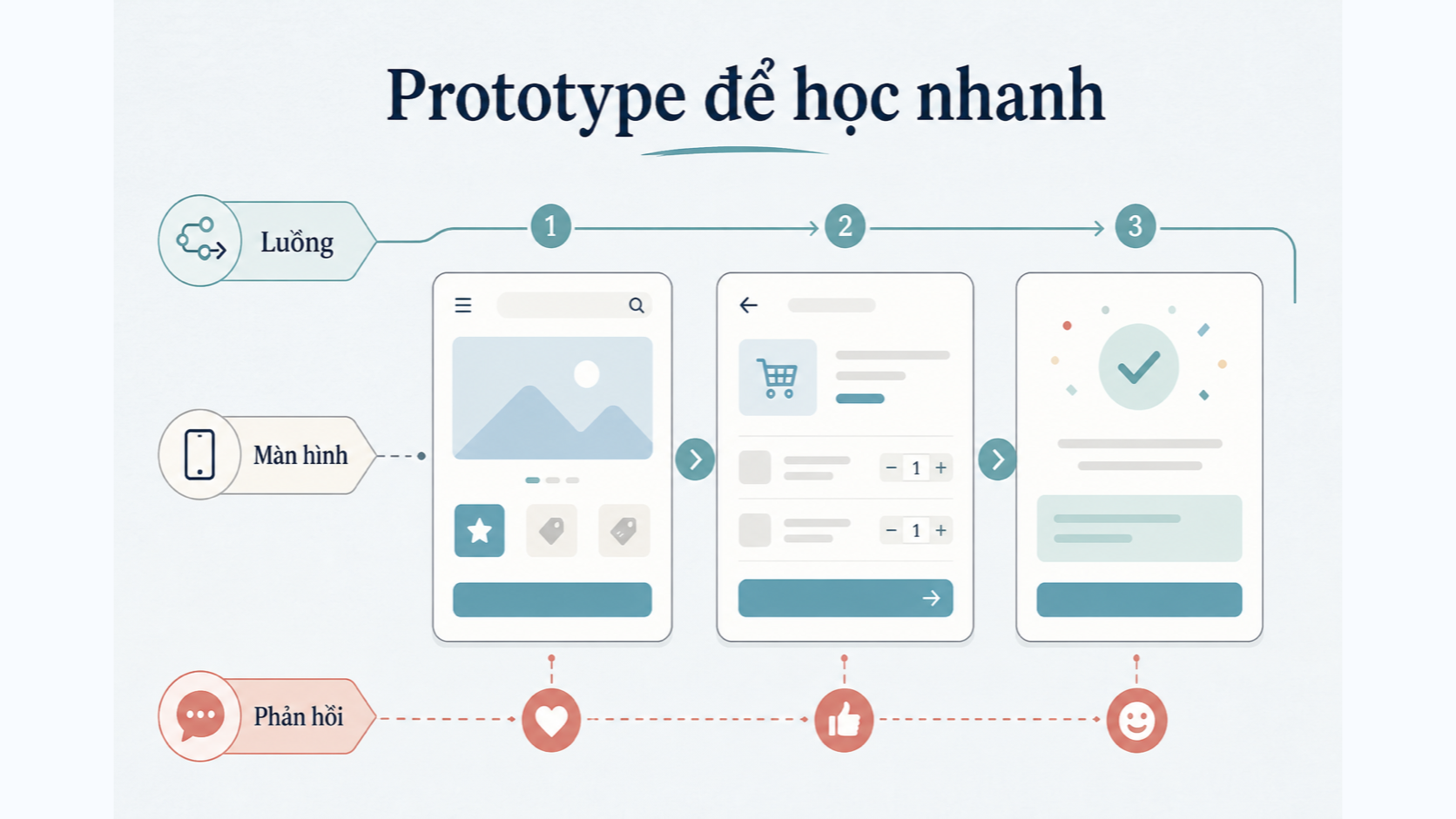
This is a highly finished MVP, almost identical to the final product in terms of interface and features.
How it works:
-
Realistic simulation of user experience.
-
Integrates many features for comprehensive testing.
Suitable when:
-
You need detailed feedback from actual users.
-
You compete in a fierce market.
-
You want to impress investors with a product that has depth.
6. Low-Fidelity MVP
A simple and low-cost MVP that focuses on validating basic assumptions.
How it works:
-
Simple interface, few features.
-
Easy to create, quick to change, low cost.
Suitable when:
-
You are in the idea stage.
-
You want to quickly test many directions before deciding.
7. Landing Page MVP
One of the most effective and popular forms of MVP.
How it works:
-
Create an introduction page that explains the product idea, features, and value.
-
Add images, mockups, and CTAs like “Sign up,” “Try it,” “Book.”
Suitable when:
-
You want to measure interest through traffic, conversions, and registrations.
-
You want to test your messaging, positioning, and pricing before building your product.
Looking for a Cost-Effective MVP Solution?
We can help you.
AtWinterfrost, we build high-quality, reasonable-cost MVPs and apply Agile methods to help startups:
-
Verify ideas quickly
-
Save budget
-
Prepare a solid foundation for future expansion
Ready to build an MVP for your startup? Let's start the conversation!
How to Build a Startup MVP: Step-by-Step Process from A–Z
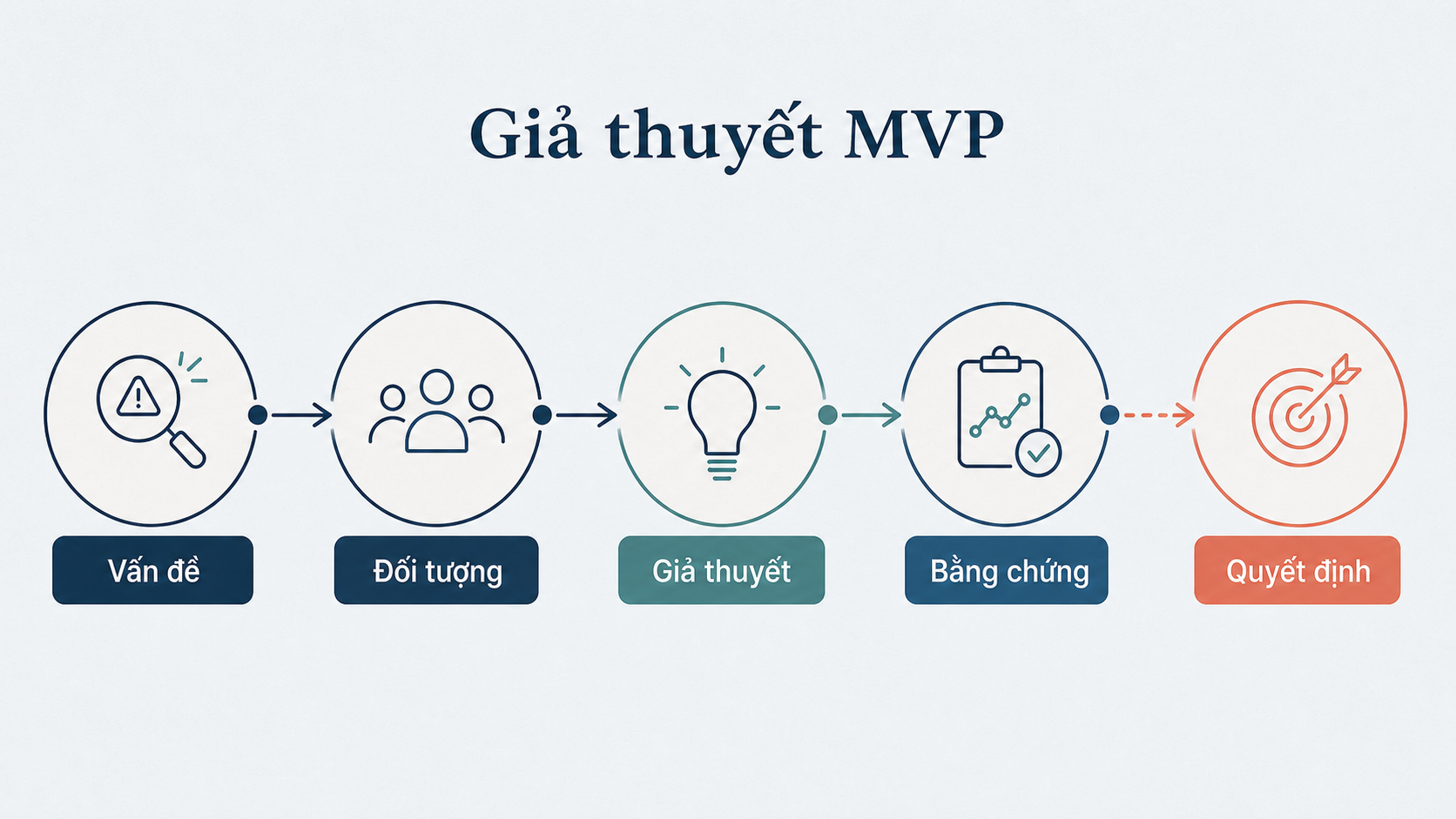
Developing an MVP requires strategic thinking and user focus to ensure the product solves a real problem and delivers valid data for later scaling. Follow the structured process below to build an effective MVP:
1. Clearly identify the problem that needs to be solved
Every successful MVP starts with a precisely defined problem.
The clearer the problem, the easier it is for the product to meet user needs.
Ask yourself:
-
What problem are we solving?
-
Why is this issue important at the present time?
-
How will solving the problem make users better?
The problem definition is the foundation upon which the MVP's core value and feature set are built.
2. Understand the target user profile and needs
The MVP must be created for the right audience.
Deep understanding of your users helps you design the right features and create meaningful experiences.
How to do it:
-
Build user personas (demographics, goals, pain points, behaviors).
-
Plot the customer journey to identify friction points and opportunities.
-
Identify user motivations and barriers.
3. Verify ideas with market research
Market validation ensures you're building the right product, not just satisfying your assumptions.
Important steps:
-
Competitor analysis: what do they do? What's missing?
-
Chat with potential users: survey, interview, focus group.
-
Research market trends to confirm long-term needs.
This step helps avoid costly mistakes and refine the value proposition.
4. Prioritize core MVP features
The MVP should only contain features that directly solve the user's main problem.
Priority way:
-
List all possible features.
-
Sort by user value, urgency, and technical feasibility.
-
Selectminimal featuresbut demonstrates the value of the solution.
Focus = faster, clearer and more economical.
5. Create prototypes to test ideas
Prototype helps you visualize the product and get early feedback without spending a lot of development costs.
Suggested tools:
-
Figma / Sketch→ wireframe & UI design
-
InVision/Marvel→ interactive prototype
-
Bubble/Webflow→ prototype has simple functionality (no-code)
Prototype testing helps optimize the experience and confirm suitability for users.
6. Build the first functional version MVP
Once the prototype has been verified, develop a real working version based on the most essential features.
Important principles:
-
Sticking to the scope has prioritized avoiding “feature bloat”.
-
Apply Agile methods for rapid improvement.
-
Continuous testing throughout the development process.
Objective:fast + useful + usable, doesn't need to be perfect.
7. Launch MVP to real users
MVP only develops value when used in a real environment.
How to deploy effectively:
-
Launched for early adopters or beta testers.
-
Promote through Product Hunt, community, social media...
-
Encourage experience with incentives: discounts, early access, exclusive content.
The insights collected will guide the product roadmap.
You Now Have a Roadmap to Building a Complete MVP
From problem identification to product launch, this process ensures your MVP is developedFocused, economical and based on real data.
If you are buildingSaaS, the next step is to learn about the specific considerations for SaaS MVP we can provide in-depth guidance.
Right after that, you also need to understandCommon challenges in MVP development and how to overcome themThe content will be presented in the next section.
How much does it cost to develop an MVP for a startup?
The cost of building an MVP varies significantly depending on the complexity of the product, feature set, and development method. On average, the cost of developing an MVP for a startup is usually in the range of10,000 – 50,000 USD, but can be higher if the product requires great scalability or complex integration.
Below is a detailed classification by each level:
🟢 MVP Basic $10,000 to $25,000
-
Includes only essential features
-
Suitable for idea validation at a very early stage
-
Development time:4–8 weeks
🟡 MVP Intermediate 25,000 to 50,000 USD
-
Better UI/UX, integration with some third-party services
-
Suitable for startups preparing for pitching or pre-seed rounds
-
Development time:2–4 months
🔵 Advanced MVP 50,000 to 100,000+ USD
-
More features, scalable backend, complex integration
-
Suitable for startups that want to launch in the real market and scale soon
-
Development time:4–6 months
Key Factors Influencing MVP Development Costs
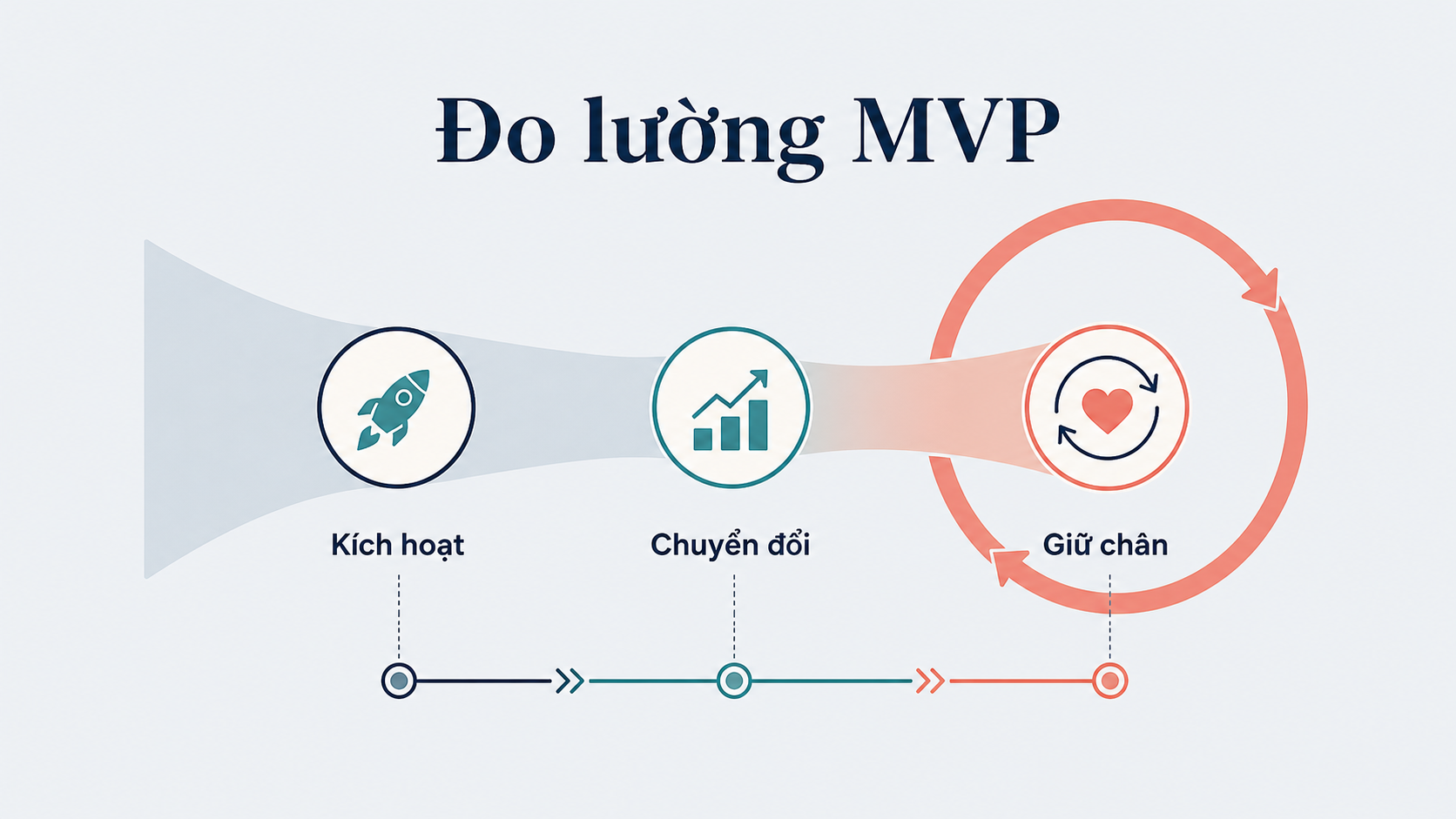
Understanding the factors that determine costs will help founders plan more accurately and avoid unwanted expenses. Below are the factors that have the biggest impact on MVP development costs:
1. Feature scope and complexity
More features → more hours of development.
Keeping the feature set compact helps:
-
Reduce costs
-
Shorten time
-
Focus on verifying core values
2. Team model
Recruiting your own in-house team is often the most expensive due to salary, benefits, and operating costs.
Most startups save money40–60%when cooperating with a company specializing in MVP development.
3. Development method
The platform you choose directly affects your budget:
-
Mobile app: more expensive to develop separately for iOS & Android
-
Flutter/React Native: 30–40% reduction in time and costs thanks to common codebase
-
Web app: fastest and most economical development
4. Technology used
Modern & easy to expand technologies such asNode.js, React, Flutter, Djangohelps speed up development and reduce maintenance costs.
Integrating third-party APIs (authentication, payments, analytics…) also affects budgets.
5. Progress & working methods
The deadline is more urgent → more human resources are needed → costs increase.
MethodAgile, although more labor intensive in the early stages, helps:
-
Reduce rework
-
Optimize quality
-
Long-term cost savings
Need more clarity?
We have built a detailed guide that helps startups fully grasp the cost of MVP development at each stage.
MVP development is a balancing actBudget – speed – quality. With a focused feature set and the right team, you can bring your ideas to life quickly without going over budget.
The Biggest Challenges When Startups Develop MVPs
Developing an MVP may sound simple, but in reality, startups face many hurdles from defining the right scope of features to managing limited resources. Understanding these challenges from the start helps teams avoid costly mistakes and build a product that truly works for users.
Here are the most common difficulties and how they affect MVP success:
Challenge 1: Identify the right MVP scope
This is the most difficult problem: choosing which features to have and which features to eliminate.
A “feature-hungry” MVP will be expensive and confusing for users, while an MVP that is too sketchy will fail to demonstrate true value.
Why is it difficult?
-
Fear of omissions: Many teams worry that removing features will make the product weak.
-
Pressure from stakeholders: Founders, investors or internal departments often want to add “just one more feature”, leading toscope creep.
Challenge 2: Limited budget and resources
Startups often have to do a lot with little capital, little human resources, and little time. This makes it difficult to build a quality MVP without going over budget.
Why is it difficult?
-
High development costs: Even if you are an MVP, you still need to design, program, operate and test.
-
Difficult to hire good people: Finding experienced engineers, designers or PMs at the right price is a big challenge.
Challenge 3: Balancing speed and quality
Launching quickly is important, but being too hasty can make the product unstable, difficult to use, and a poor experience. On the contrary, being too perfectionist slows down progress and misses market opportunities.
Why is it difficult?
-
Short deadline: Competitive market forces startups to sprint.
-
High expectations: Investors and users still expect a smooth experience even if it's just an MVP.
Challenge 4: Collect quality user feedback
MVP helps learn quickly, but getting truly valuable feedback isn't easy.
Why is it difficult?
-
Lack of initial users: If there is no clear audience, the MVP may not have enough usage to create insights.
-
Difficult to differentiate: Some feedback is useful, other parts are emotional. Sorting out “signal” and “noise” is an important skill.
Challenge 5: Technical limitations
The technical decisions made when building an MVP will have lasting effects. Choosing the wrong stack, wrong architecture, or wrong tools can make future expansion costly and complicated.
Why is it difficult?
-
Lack of expertise: Early startups often do not have strong enough senior engineers or technical leads.
-
Scalable problem: Building a lightweight but still scalable MVP requires real-world experience.
Want to Build an MVP Fast, Efficient and On Track?
Our team of experts helps startups build MVPsscalable, cost optimization, andmeet investor requirementsAvoid technical risks and unnecessary costs.
Let us turn your idea into a market-ready MVP quickly and strategically.
Building an Economical and Effective MVP with Winterfrost
Over the years,Winterfrosthas accompanied hundreds of startups and global businesses in building MVPs with strong impact, spanning many fields such ashealthcare, fintech, real estate, logistics, edtech and e-commerce. We combine methodsLean Startupand processAgile, helps you:
-
Verify ideas quickly
-
Collect feedback from real users
-
Fine-tune products according to real-world data
-
Ensure security standards and compliance from the start
At Winterfrost, we focus on the most important factors for a successful MVP:
✔ Core feature set – no redundancy
✔ Fast launch time – gain market advantage
✔ Optimize development costs
✔ Scalable ready architecture for complete version
Do you have an idea and want to turn it into a real product? We are ready to accompany. With an experienced MVP development team and transparent process, Winterfrost will lead you from idea to product launch with confidence and a clear strategy.
👉 Schedule a consultation with Winterfrost's MVP development team today and start building a truly different product.
Contact Winterfrost nowto receive a free consultation and learn more about packagesApp designComplete package for startups!
FAQ
1. How is an MVP different from a complete product (Full Product)?
MVPOnly include core features to validate ideas and gather feedback from users.
Full Productis the complete version with full features, sophisticated integration and extensibility.
MVP is built in advance to help startups avoid investing too much in unproven products.
2. Does an MVP have to be perfect to launch?
No. MVP is not a perfect product it is just necessarygood enough, easy to use and solvea central issue.
The main goal is to learn quickly and improve through each round of feedback from real users.
3. What is the average time to build an MVP?
Depending on complexity, but usually:
-
Basic MVP:4–8 weeks
-
Intermediate MVP:2–4 months
-
Advanced MVP:4–6 months
Agile helps shorten time and speed up testing.
4. Can an MVP attract investors?
Yes. Many startups successfully raise capital only with MVP, because investors want to see:
-
Technical considerations
-
Users are truly interested (traction)
-
Clear product vision (roadmap)
Famous examples: Airbnb, Dropbox, Uber all started with MVPs.
5. Should startups choose web app or mobile app for MVP?
This depends on:
-
Habits of target users
-
Complexity level of the solution
-
Initial budget
For many startups,web MVPis the optimal choice because it is cheaper, faster to develop, and easier to collect data.
Mobile MVP is suitable when the application needs a camera, GPS, tracking or native experience.
6. Should you build an MVP with no-code or low-code?
Yes if:
-
You need a quick test
-
Simple feature
-
Limited budget
However, if you need:
-
Scalability
-
Complex logic
-
System integration
→ Should develop custom to avoid costs when having to rebuild later.
7. Can MVP be upgraded to an official product?
Yes, if it is built using standard architecture from the beginning.
With Winterfrost, every MVP is designed to:
-
Easy to expand
-
Easy to integrate
-
No need to rewrite from scratch
You can continue to develop into the full version smoothly.
8. At what stage does Winterfrost support startups?
We provide full support:
-
Validation of ideas (Validation)
-
Build wireframes & prototypes
-
MVP development
-
Optimize products after launch
-
Support building roadmap & expanding full version
Whether you're at the idea stage or preparing for launch, Winterfrost has the right solution.
9. How to start building an MVP with Winterfrost?
Very simple:
👉 Send us your idea description
Winterfrost will support you with analysis, feature consultation, cost estimates and complete timelinefree.